
Lesson 1: 她请我们吃了北京烤鸭 Tā qǐng wǒmen chīle Běijīng Kǎoyā
热身 Warm-Up
1. 给下面的词语选择对应的图片。Match the words/phrases with the pictures.
2. 回忆自己上次出行的经历,完成下面的调查表。Recall your last travel experience and complete the following survey.
| 项目 Items | 关键词 Key Words | 回答 Answers |
|---|---|---|
| 出发时间 Departure Time | 什么时候去的 | |
| 同伴 Companions | 和谁去的 | |
| 旅行方式 Travel Method | 怎么去的 |
课文1 Text 1
在机场,王一雪接到了白家月和安妮。
问题: (1)谁来接白家月了? (2)王一飞给谁打电话了?
问题: (1)谁来接白家月了? (2)王一飞给谁打电话了?
白家月
(Bái Jiāyuè)
(Bái Jiāyuè)
请问,您是王一飞老师的姐姐吗?
王一雪
(Wáng Yìxuě)
(Wáng Yìxuě)
是的,你们就是她的学生吧?
白家月
(Bái Jiāyuè)
(Bái Jiāyuè)
对。我是白家月,她是安妮。
王一雪
(Wáng Yìxuě)
(Wáng Yìxuě)
你们好,我叫王一雪。一飞给我打电话了,让我来接你们。
白家月 安妮
谢谢您。
王一雪
(Wáng Yìxuě)
(Wáng Yìxuě)
不客气。
Bai Jiayue: Excuse me, are you Teacher Wang Yifei's elder sister?
Wang Yixue: Yes, you two must be her students, right?
Bai Jiayue: Correct. I'm Bai Jiayue, and this is Annie.
Wang Yixue: Hello, I'm Wang Yixue. Yifei called me and asked me to come and pick you up.
Bai Jiayue and Annie: Thank you very much.
Wang Yixue: You're welcome.
Wang Yixue: Yes, you two must be her students, right?
Bai Jiayue: Correct. I'm Bai Jiayue, and this is Annie.
Wang Yixue: Hello, I'm Wang Yixue. Yifei called me and asked me to come and pick you up.
Bai Jiayue and Annie: Thank you very much.
Wang Yixue: You're welcome.
课文2 Text 2
在王一雪的车里,白家月、安妮和王一雪在聊天儿。
问题: (1)白家月是第几次来北京? (2)她们这次是来做什么的?
问题: (1)白家月是第几次来北京? (2)她们这次是来做什么的?
王一雪
(Wáng Yìxuě)
(Wáng Yìxuě)
你们是第一次来北京吗?
白家月
(Bái Jiāyuè)
(Bái Jiāyuè)
是的,我们都是第一次来。
王一雪
(Wáng Yìxuě)
(Wáng Yìxuě)
你们是来学中文的吗?
安妮
(Ān ni)
(Ān ni)
不是,我们是来旅游的。
王一雪
(Wáng Yìxuě)
(Wáng Yìxuě)
我这几天都不忙,你们有事就找我。
白家月
(Bái Jiāyuè)
(Bái Jiāyuè)
好的,谢谢您。
Wang Yixue: Is this your first time in Beijing?
Bai Jiayue: Yes, it's the first time for both of us.
Wang Yixue: Are you here to study Chinese?
Annie: No, we are here for sightseeing.
Wang Yixue: I'm not busy these days. If you need anything, just let me know.
Bai Jiayue: Okay, thank you.
Bai Jiayue: Yes, it's the first time for both of us.
Wang Yixue: Are you here to study Chinese?
Annie: No, we are here for sightseeing.
Wang Yixue: I'm not busy these days. If you need anything, just let me know.
Bai Jiayue: Okay, thank you.
课文3 Text 3
在王一雪的车上,白家月接了个电话。
问题: (1)陈天中为什么给白家月打电话? (2)白家月是什么时候到北京的?
问题: (1)陈天中为什么给白家月打电话? (2)白家月是什么时候到北京的?
陈天中
(Chén Tiānzhōng)
(Chén Tiānzhōng)
喂,家月,你明天有时间吗?我想请你帮个忙。
白家月
(Bái Jiāyuè)
(Bái Jiāyuè)
不好意思,天中,我已经到北京了。
陈天中
(Chén Tiānzhōng)
(Chén Tiānzhōng)
你是什么时候到的?
白家月
(Bái Jiāyuè)
(Bái Jiāyuè)
我是今天早上到的。你有事可以叫李文帮忙,他还在学校呢。
陈天中
(Chén Tiānzhōng)
(Chén Tiānzhōng)
好的。那我给他打个电话。
白家月
(Bái Jiāyuè)
(Bái Jiāyuè)
好。再见!
Chen Tianzhong: Hello, Jiayue, do you have time tomorrow? I'd like to ask you for a favor.
Bai Jiayue: I'm sorry, Tianzhong, I've already arrived in Beijing.
Chen Tianzhong: When did you arrive?
Bai Jiayue: I arrived this morning. If you need anything, you can ask Li Wen for help—he's still at school.
Chen Tianzhong: Okay. Then I'll give him a call.
Bai Jiayue: All right. Goodbye!
Bai Jiayue: I'm sorry, Tianzhong, I've already arrived in Beijing.
Chen Tianzhong: When did you arrive?
Bai Jiayue: I arrived this morning. If you need anything, you can ask Li Wen for help—he's still at school.
Chen Tianzhong: Okay. Then I'll give him a call.
Bai Jiayue: All right. Goodbye!
课文4 Text 4
在酒店,白家月给王一飞发信息。
问题: (1)王老师到北京了,是她姐姐来接的她吗? (2)白家月现在要去吃北京烤鸭吗?
问题: (1)王老师到北京了,是她姐姐来接的她吗? (2)白家月现在要去吃北京烤鸭吗?
王老师,我们已经到北京了,是您姐姐来接的我们. 她请我们吃了北京烤鸭,还给我们介绍了很多东西。我们的中文不太好,有时不太懂她的意思。
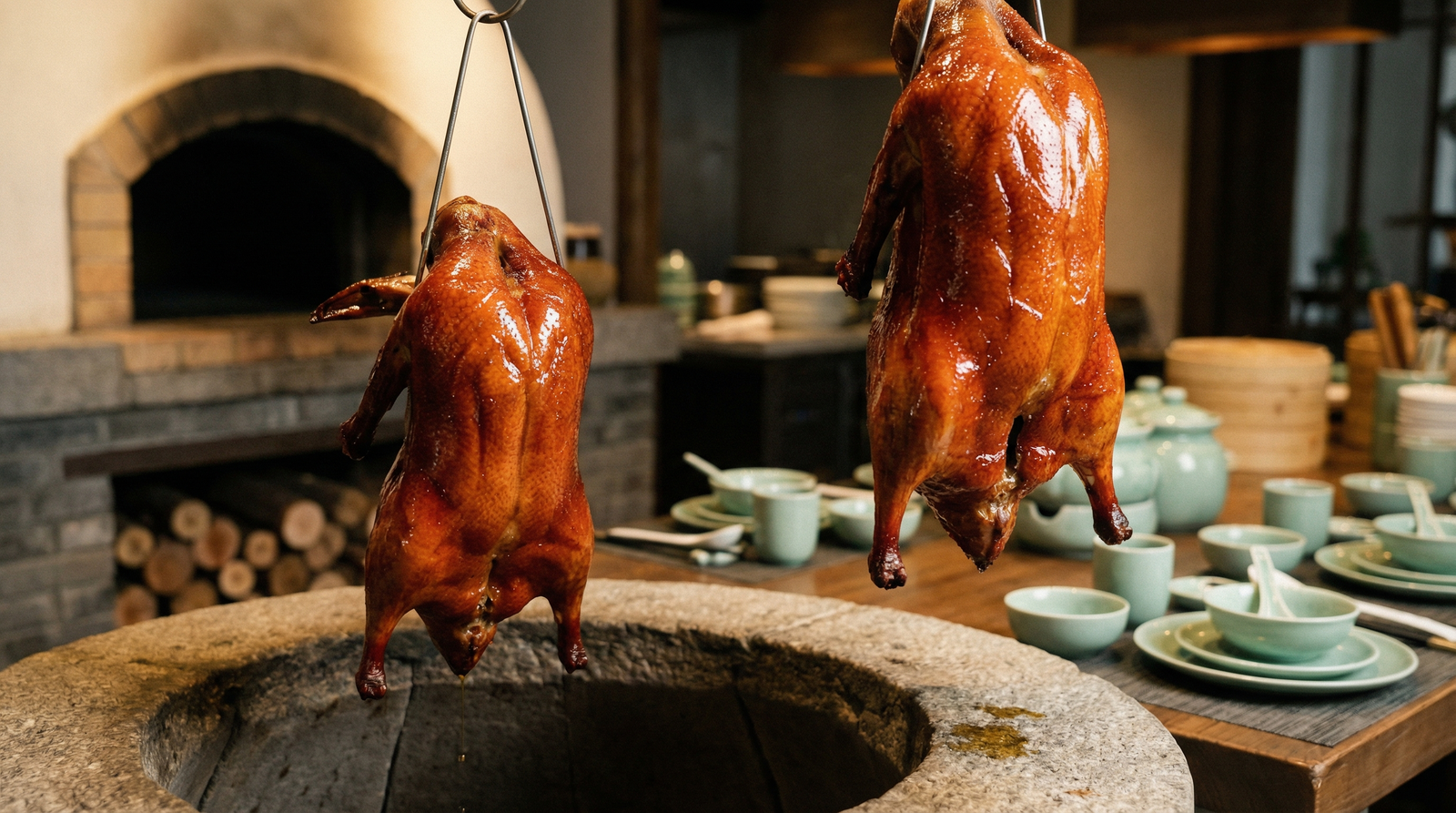
Ms. Wang, we've already arrived in Beijing. It was your sister who picked us up. She treated us to Peking Duck and introduced many things to us. Our Chinese is not very good, so sometimes we don't quite understand her.
生词 New Words
语法点 Grammer
1 语气助词“吧”(2) Modal Particle “吧” (2)
语气助词“吧”用在疑问句末尾,表达揣测、估计的语气。例如:
The modal particle “吧” is used at the end of an interrogative sentence to express a tone of speculation or estimation. For example:
- (1) 你们就是她的学生吧?(Nǐmen jiù shì tā de xuéshēng ba?)
- (2) 她唱歌很好听吧?(Tā chàng gē hěn hǎotīng ba?)
- (3) 陈天中是泰国人吧?(Chén Tiānzhōng shì Tàiguórén ba?)
2 “是……的”句 “S hì...de” Sentence
“是……的”句用来强调事情发生的时间、地点、方式、动作者、目的等。肯定句和疑问句中可以省略“是”,否定句中不能省略“是”。例如:
The “是……的” sentence can be used to emphasize the time, place, manner, agent, purpose, etc., of an event. In affirmative and interrogative sentences, “是” can be omitted, but it cannot be omitted in negative sentences. For example:
- (1) 我们是来旅游的。(Wǒmen shì lái lǚyóu de.)
- (2) 苹果在哪儿买的?(Píngguǒ zài nǎr mǎi de?)
- (3) 我们不是坐出租车去的。(Wǒmen bú shì zuò chūzūchē qù de.)
3 兼语句 Pivotal Sentences
兼语句的谓语由两个动词短语组成,前一个动词的宾语是第二个动词的主语。前一个动词是“请、让、叫”时,表示让某人做某事。基本结构: 主语+请/让/叫+宾语(→主语)+动词或动词性短语。例如:
A pivotal sentence consists of two verbal phrases, in which the object of the first verb serves as the subject of the second verb. When the preceding verb is “请”, “让”, or “叫”, it indicates asking or having someone do something. Basic structure: Subject + 请/让/叫 + Object (Subject) + Verb or Verbal Phrase. For example:
- (1) 我想请你帮个忙。(Wǒ xiǎng qǐng nǐ bāng gè máng.)
- (2) 王老师让我们说中文。(Wáng lǎoshī ràng wǒmen shuō Zhōngwén.)
- (3) 妈妈叫孩子们回家。(Māma jiào háizimen huí jiā.)
中国文化
北京烤鸭的吃法 (The Proper Way to Enjoy Peking Duck)
北京烤鸭是享誉世界的北京名菜。通常搭配薄饼、甜面酱、大葱丝和黄瓜条食用。