
Lesson 10: 就要考试了 Jiù yào kǎoshì le
目标 Objectives
- 能听懂并使用主谓谓语句对人、事物或情况进行说明。 Be able to understand and use sentences with a subject-predicate phrase as the predicate to describe people, things, or situations.
- 能听懂并使用选择问句表示疑问。 Be able to understand and use alternative questions to express inquiries.
- 掌握固定格式“要/快/快要/就要………………了”的用法,能表达某事即将发生。 Master the use of the fixed pattern “要/快/快要/就要………………了” to express that something is about to happen.
热身 Warm-Up
1 给下面的词语选择对应的图片。Match the words with the pictures.
2 根据实际情况互相问答。Ask each other questions based on real-life situations.
- (1) 爷爷买了奶茶、咖啡和牛奶,你想喝什么?
- (2) 商场有白色的裤子,也有黑色的裤子,你买哪条?
- (3) 明天星期六,可以在家看电视,也可以去看电影,你想做什么?
课文1 Text 1
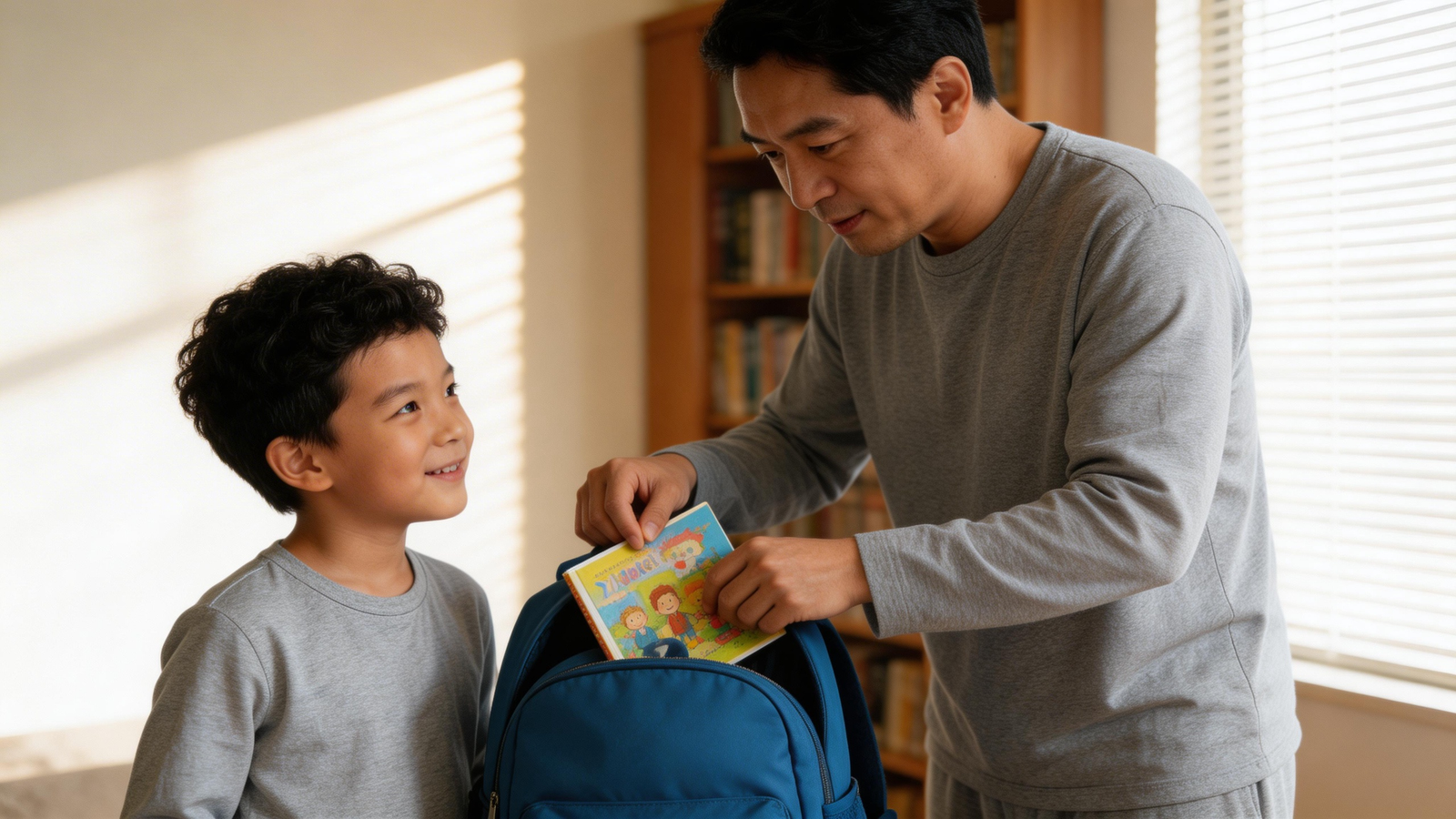
在房间,刘明在帮刘小明准备东西。 In the room, Liu Ming was helping Liu Xiaoming prepare things.
听力问题: (1)书包在哪儿? (2)笔在哪儿?
刘明
小明,你们明天开学,你准备好了吗?
刘小明
明天就开学啊?爸爸,我的书包你看见了吗?
刘明
书包在门后面。
刘小明
书在哪儿呢?笔呢?
刘明
书在床上,笔在桌子上。
刘小明
太好了!现在都准备好了。
刘明
这次爸爸帮你,下次你自己准备,好不好?
刘小明
好!
提示 Tips: 这里“呢”表示提醒或深究的语气。 Here, “呢” indicates a tone of reminder or inquiry.
Liu Ming: Xiaoming, school starts tomorrow. Are you ready?
Liu Xiaoming: School starts tomorrow? Dad, did you see my schoolbag?
Liu Ming: It's behind the door.
Liu Xiaoming: Where are my books? And my pens?
Liu Ming: The books are on the bed, and the pens are on the table.
Liu Xiaoming: Great! Everything is ready now.
Liu Ming: Dad helped you this time. Next time, you prepare it by yourself, okay?
Liu Xiaoming: Okay!
Liu Xiaoming: School starts tomorrow? Dad, did you see my schoolbag?
Liu Ming: It's behind the door.
Liu Xiaoming: Where are my books? And my pens?
Liu Ming: The books are on the bed, and the pens are on the table.
Liu Xiaoming: Great! Everything is ready now.
Liu Ming: Dad helped you this time. Next time, you prepare it by yourself, okay?
Liu Xiaoming: Okay!
分角色朗读对话,读后回答问题:
(1)刘小明什么时候开学? (2)刘小明准备好了吗?为什么?
课文2 Text 2
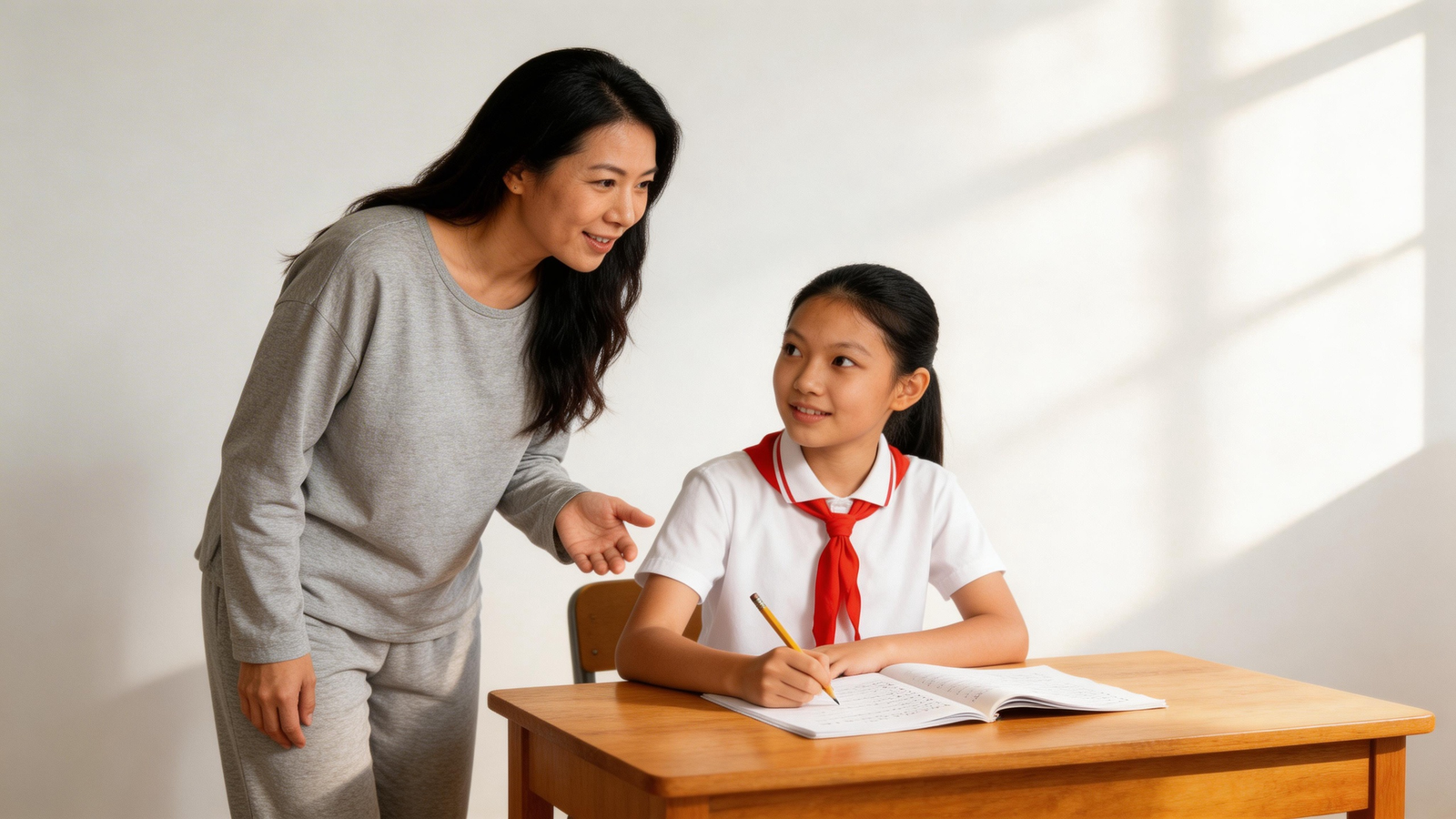
在房间,王一雪和刘小雪在聊学习。 In the room, Wang Yixue and Liu Xiaoxue were talking about studying.
听力问题: (1)刘小雪在做什么? (2)做错的题在哪儿?
王一雪
小雪,你在做什么呢?
刘小雪
明天考试,我在看书呢。
王一雪
这些词要好好看看。
刘小雪
我看过了,意思也都懂了。
王一雪
你的本子呢?本子上做错的题也要看一看。
刘小雪
妈妈,是您准备考试还是我准备考试?
Wang Yixue: Xiaoxue, what are you doing?
Liu Xiaoxue: I have an exam tomorrow, so I'm reading.
Wang Yixue: You should review these words carefully.
Liu Xiaoxue: I've already reviewed them, and I understand their meanings.
Wang Yixue: Where's your notebook? You should also go over the questions you got wrong in it.
Liu Xiaoxue: Mom! Are you the one preparing for the exam or am I?
Liu Xiaoxue: I have an exam tomorrow, so I'm reading.
Wang Yixue: You should review these words carefully.
Liu Xiaoxue: I've already reviewed them, and I understand their meanings.
Wang Yixue: Where's your notebook? You should also go over the questions you got wrong in it.
Liu Xiaoxue: Mom! Are you the one preparing for the exam or am I?
分角色朗读对话,读后回答问题:
(1)刘小雪明天要做什么? (2)这些词的意思刘小雪都懂了吗?
课文3 Text 3
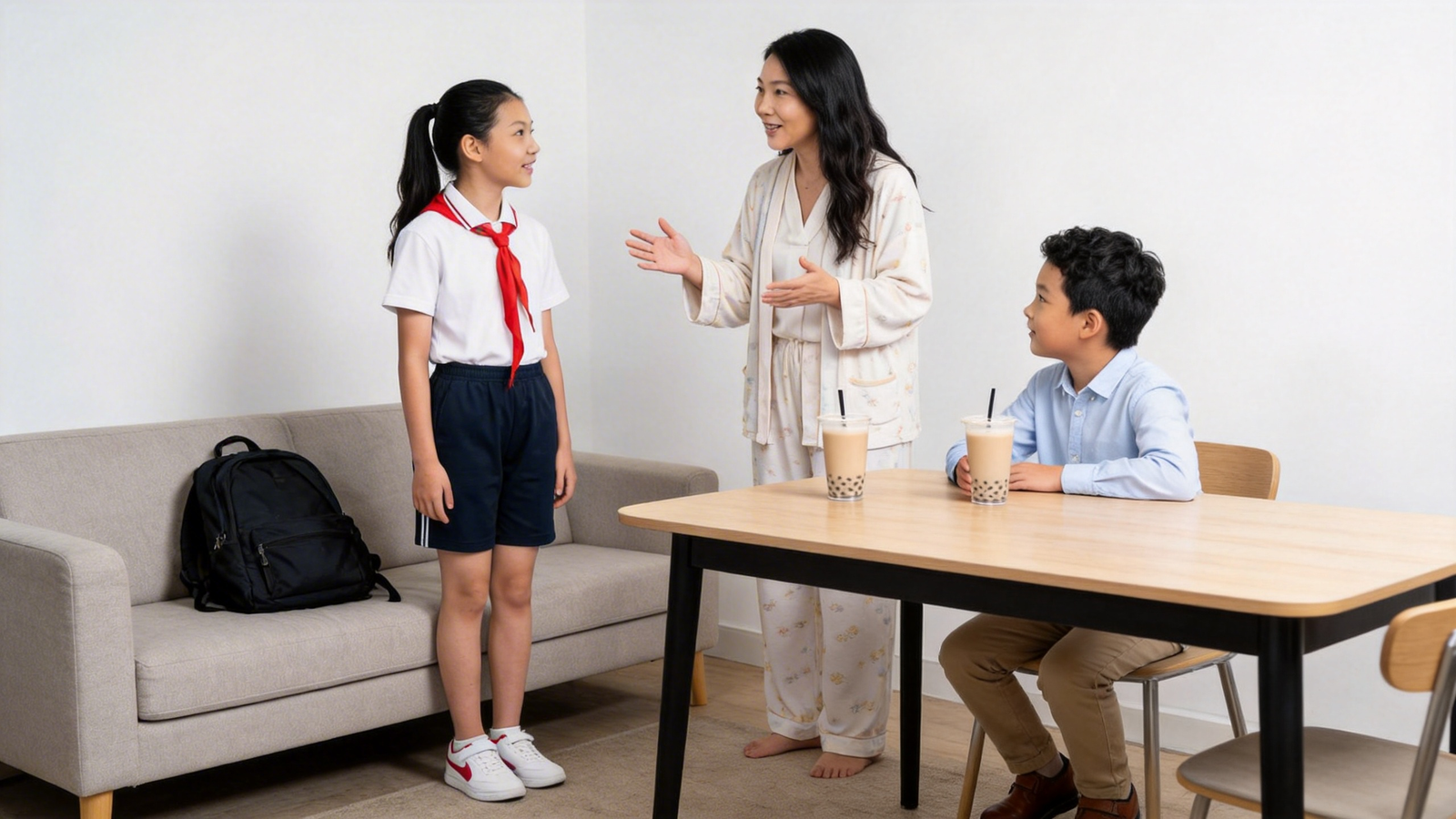
在客厅,王一雪和孩子们在聊天儿。 In the living room, Wang Yixue was chatting with the children.
听力问题: (1)刘小雪考试考得怎么样? (2)王一雪正在做什么?
刘小雪
妈妈,我回来了!
王一雪
我买了奶茶,就在桌子上,自己去拿吧。
刘小雪
谢谢妈妈!
王一雪
今天考试考得怎么样?
刘小雪
我觉得比上次好。
王一雪
真不错!饭菜快要做好了,你叫弟弟一起去洗手吧。
刘小明
妈妈,我是第一名,姐姐还没洗完呢。
王一雪
你洗得真快啊!
Liu Xiaoxue: Mom, I'm back!
Wang Yixue: I bought you a cup of bubble tea; it's on the table, get it by yourself.
Liu Xiaoxue: Thank you, Mom!
Wang Yixue: How was your exam today?
Liu Xiaoxue: I think I did better than last time.
Wang Yixue: You are amazing! The food is almost ready. Go ask your little brother to wash his hands together with you.
Liu Xiaoming: Mom, I'm the first one done; my sister hasn't finished yet.
Wang Yixue: You washed your hands so quickly!
Wang Yixue: I bought you a cup of bubble tea; it's on the table, get it by yourself.
Liu Xiaoxue: Thank you, Mom!
Wang Yixue: How was your exam today?
Liu Xiaoxue: I think I did better than last time.
Wang Yixue: You are amazing! The food is almost ready. Go ask your little brother to wash his hands together with you.
Liu Xiaoming: Mom, I'm the first one done; my sister hasn't finished yet.
Wang Yixue: You washed your hands so quickly!
分角色朗读对话,读后回答问题:
(1)王一雪叫刘小雪做什么? (2)孩子们洗完手了吗?
课文4 Text 4
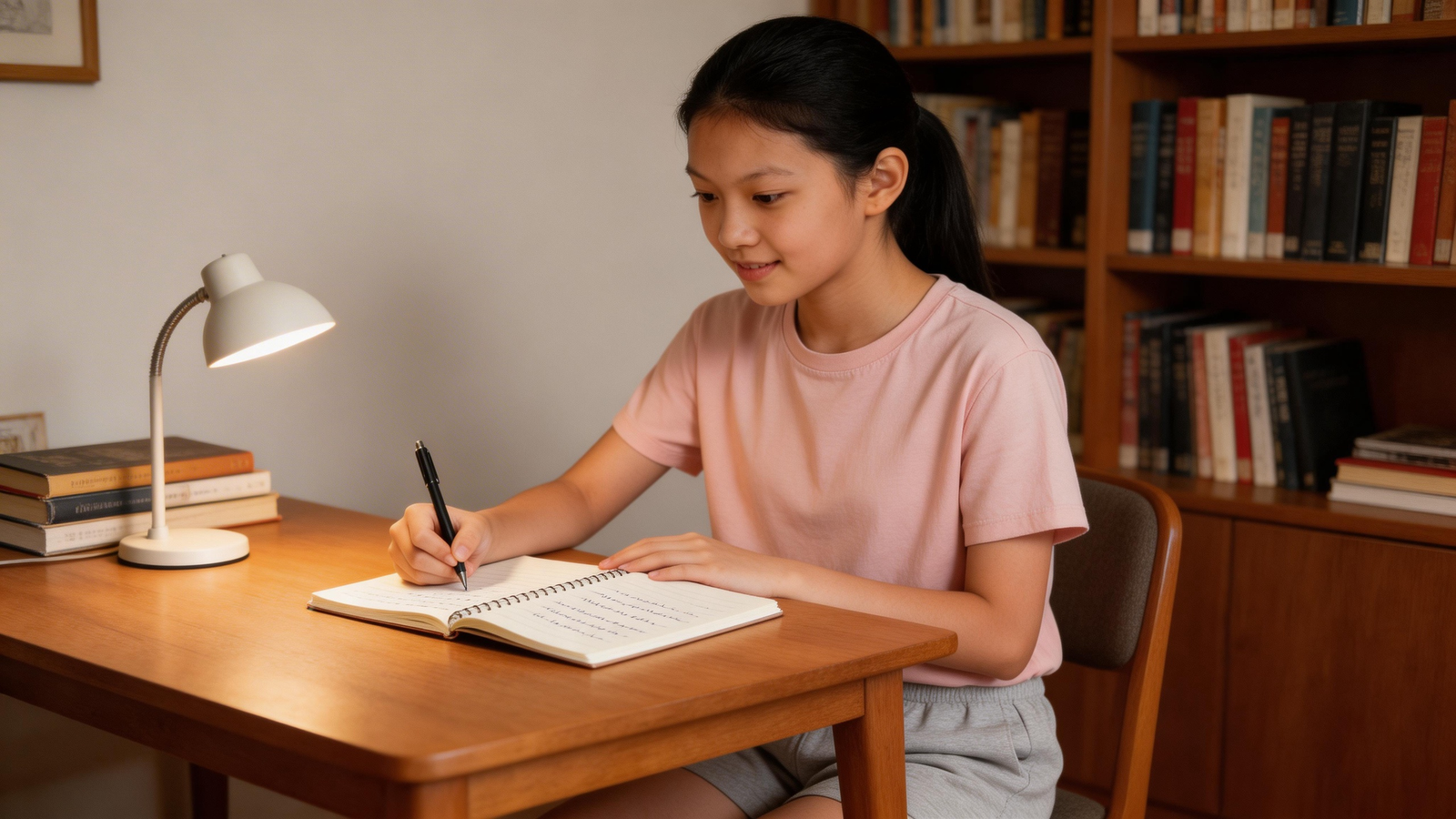
在房间,刘小雪在写日记。 In the room, Liu Xiaoxue was writing in her diary.
判断正误: (1)刘小雪考试前,爸爸帮她准备考试。 (2)刘小雪和弟弟上学,爸爸、妈妈比他们还忙。
快要开学了,爸爸帮弟弟准备书包、本子和笔。我就要考试了,妈妈让我看书、看做错的题。我们上学,爸爸、妈妈比我们还忙。我问他们:“是我和弟弟上学还是你们上学?”我问完,他们都笑了。
School is about to start, and dad is helping my younger brother prepare his schoolbag, notebooks, and pens. I'm about to take an exam, and mom asked me to read the books and review the questions I got wrong. It feels like our parents are even busier than us when it comes to school. I asked them, "Is it my younger brother and me going to school, or is it you?" After I asked, they both burst out laughing.
朗读课文,读后选择正确答案:
(1) 爸爸为什么帮弟弟准备书包、本子和笔?
(2) 爸爸、妈妈为什么笑了?
生词 New Words
语法点 Grammer
1 主谓谓语句 Sentences with a Subject-Predicate Phrase as the Predicate
A subject-predicate phrase can function as a predicate, providing an explanation or description of the subject, thereby forming a sentence with a subject-predicate phrase as the predicate. Generally speaking, the subject in the subject-predicate phrase is either a part of the whole sentence's subject or related to it. Basic structure: Subject + Subject-Predicate Phrase.主谓短语可以作谓语,对主语加以说明或描写,构成主谓谓语句。一般来说,主谓短语中的主语是全句主语的一部分或跟它相关。基本结构:主语+主谓短语。
- (1) 我的书包你看见了吗?
- (2) 弟弟手很小。
- (3) 这件事他知道。
2 选择问句 Alternative Questions
The conjunction “还是” is used in interrogative sentences to indicate a choice. Basic structure: (是) A 还是 B.连词“还是”用在疑问句中,表示选择。基本结构:(是)A还是B。
- (1) 妈妈,是您准备考试还是我准备考试?
- (2) 你更喜欢打篮球、踢足球还是游泳?
- (3) 我们什么时候去看电影?今天还是明天?
3 固定格式“要/快/快要/就要………………了” Fixed Pattern “要/快/快要/就要………………了”
The fixed pattern “要/快/快要/就要………………了” is used to indicate that something is about to happen. If the sentence includes a time adverbial, “就要………………了” is typically used.固定格式“要/快/快要/就要………………了”表示某事将要发生。如果句子中有时间状语,一般用“就要………………了”。
- (1) 饭菜快要做好了。
- (2) 火车快开了。
- (3) 我们下星期就要考试了。