
Lesson 4: 你穿红色的很好看 Nǐ chuān hóngsè de hěn hǎokàn
目标 Objectives
- 能听懂并询问过去的经历。Be able to understand and ask about past experiences.
- 能听懂并使用描述的方式指称事物。Be able to understand and refer to things through description.
- 掌握因果复句“因为……,所以……”的用法,能表达事情的原因和结果。Master the use of the causal complex sentence “因为……,所以……” to express causes and results of events.
热身 Warm-Up
1 给下面的词语选择对应的图片。Match the words with the pictures.
2 读一读下列词语,圈出自己曾经有过的经历。Read and circle the experiences you have had before.
| 动词 Verb | 情况1 Option 1 | 情况2 Option 2 | 情况3 Option 3 |
|---|---|---|---|
| 吃 | 包子 | 饺子 | 面条儿 |
| 喝 | 绿茶 (lǜchá) | 红茶 (hóngchá) | 花茶 (huāchá) |
| 去 | 中国 | 法国 | 泰国 |
课文1 Text 1
在商场门口,王一雪和刘小雪在聊天儿。At the entrance of the shopping mall, Wang Yixue and Liu Xiaoxue were chatting.
听力问题: (1)王一雪和刘小雪要去哪儿看看? (2)刘小雪为什么要进去看看?

刘小雪
妈妈,我们来过这家商场吗?
王一雪
没来过,这是新开的。
刘小雪
我们进去看看吧。
王一雪
好啊!你想买点儿什么?
刘小雪
我想买条裤子。
王一雪
没问题。
Liu Xiaoxue: Mom, have we been to this shopping mall before?
Wang Yixue: No, it just opened recently.
Liu Xiaoxue: Let's go inside and have a look.
Wang Yixue: Sure! What do you want to buy?
Liu Xiaoxue: I want to buy a pair of pants.
Wang Yixue: No problem.
Wang Yixue: No, it just opened recently.
Liu Xiaoxue: Let's go inside and have a look.
Wang Yixue: Sure! What do you want to buy?
Liu Xiaoxue: I want to buy a pair of pants.
Wang Yixue: No problem.
课文2 Text 2
在商场,王一雪和刘小雪在看衣服。In the shopping mall, Wang Yixue and Liu Xiaoxue were shopping for clothes.
听力问题: (1)刘小雪想买什么? (2)王一雪让刘小雪试试什么?

刘小雪
妈妈,我想买这条白色的裤子。
王一雪
你有很多白色的衣服,为什么还买白色的?
刘小雪
因为我喜欢白色啊!
王一雪
我觉得这条白色的不太好看,你试试那条红色的吧。
刘小雪
我没穿过红色的,红色的好看吗?
王一雪
就是因为没穿过,所以要试试啊!
Liu Xiaoxue: Mom, I want to buy this pair of white pants.
Wang Yixue: You already have lots of white clothes. Why do you want to buy something white again?
Liu Xiaoxue: Because I like white!
Wang Yixue: I don't think this white one looks very good. Why don't you try that red one instead?
Liu Xiaoxue: I've never worn red before. Do you think red looks good on me?
Wang Yixue: That's exactly why you should give it a try!
Wang Yixue: You already have lots of white clothes. Why do you want to buy something white again?
Liu Xiaoxue: Because I like white!
Wang Yixue: I don't think this white one looks very good. Why don't you try that red one instead?
Liu Xiaoxue: I've never worn red before. Do you think red looks good on me?
Wang Yixue: That's exactly why you should give it a try!
课文3 Text 3
在商场,王一雪和刘小雪在看书包。In the shopping mall, Wang Yixue and Liu Xiaoxue were shopping for schoolbags.
听力问题: (1)刘小雪想买什么? (2)王一雪和刘小雪觉得哪个好看?

刘小雪
妈妈,我想买个新书包。
王一雪
好,那边卖书包,我们过去看看吧。
刘小雪
这么多漂亮的书包!
王一雪
红色的、绿色的、黑色的,你想买哪个?
刘小雪
绿色的吧。
王一雪
不错,我也觉得绿色的更好看。
Liu Xiaoxue: Mom, I want to buy a new schoolbag.
Wang Yixue: Okay. They're selling schoolbags over there. Let's go and take a look.
Liu Xiaoxue: There are so many beautiful ones!
Wang Yixue: Red ones, green ones, black ones — which one do you like?
Liu Xiaoxue: The green one.
Wang Yixue: Not bad. I think the green one looks better too.
Wang Yixue: Okay. They're selling schoolbags over there. Let's go and take a look.
Liu Xiaoxue: There are so many beautiful ones!
Wang Yixue: Red ones, green ones, black ones — which one do you like?
Liu Xiaoxue: The green one.
Wang Yixue: Not bad. I think the green one looks better too.
课文4 Text 4
判断正误: (1)商场里的东西不便宜。 (2)刘小雪穿红色的裤子很好看。
我和妈妈去了一家商场。因为是新开的,所以这几天东西很便宜。商场里的衣服颜色很多。我没穿过红色的裤子,妈妈让我试了试,我觉得我穿红色的也很好看。
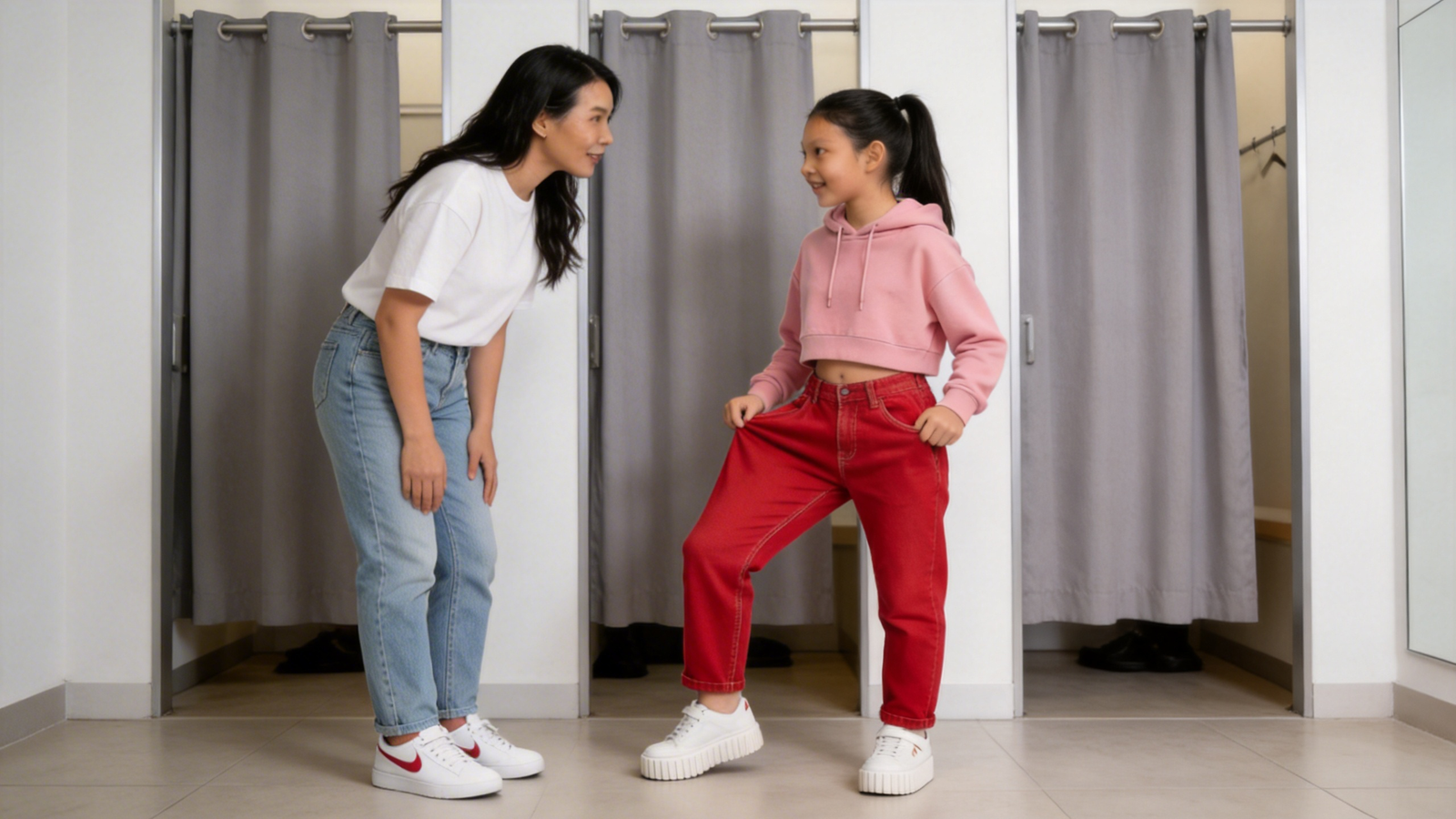
I went to a shopping mall with my mom. Since the mall had just opened, the prices were quite affordable these days. The clothes there came in many different colors. I had never worn red pants before, and my mom encouraged me to give them a try. I thought I looked pretty good in red too.
生词 New Words
语法点 Grammer
1 动态助词“过” Aspect Particle “过”
动态助词“过”用在动词后面,表示动作曾在过去发生,但未持续到现在。基本结构:主语+动词+过+宾语。否定形式是在动词前面加“没(有)”。例如:
The aspect particle “过” is used after a verb to indicate that an action occurred in the past but has not continued to the present. Basic structure: Subject+Verb+过+Object. The negative form is constructed by adding “没(有)”before the verb.
- (1) 她去过中国。
- (2) 我吃过饺子,很好吃。
- (3) 她没去过中国。
疑问形式有三种:(1) 在句尾加“吗”;(2) 在句尾加“没有”;(3) 动词+没+动词+过。例如:
There are three types of interrogative forms: (1) add “吗” at the end of the sentence; (2) add “没有” at the end of the sentence; and (3) Verb+没+Verb+过. For example:
- (1) 我们来过这家商场吗?
- (2) 陈天中吃过饺子没有?
- (3) 你看没看过那个电影?
2 因果复句“因为……,所以……” Causal Complex Sentence “因为……,所以……”
“因为……所以……”构成因果关系复句。“因为”和“所以”可以成对使用,也可以只用其中的一个。例如:
The structure “因为……所以……” forms a complex sentence expressing cause and effect. “因为” and “所以” can be used either together as a pair or individually. For example:
- (1) 就是因为没穿过,所以要试试啊!
- (2) 因为我生病了,今天没去上班。
- (3) 我没去过他家,所以让他来车站接我。
3 “的”字短语 “的” Phrase
结构助词“的”用在名词、代词、动词、形容词等后面,组成“的”字短语,相当于名词性短语。例如:
The structural particle “的” is used after nouns, pronouns, verbs, adjectives, etc., to form a “的”phrase, which functions as a noun phrase. For example:
- (1) 红色的、绿色的、黑色的,你想买哪个?(=红色的书包、绿色的书包、黑色的书包)
- (2) 这个面包是爸爸买的,妈妈买的在那儿。(=买的面包)
- (3) 这件衣服太贵了,还是买那件便宜的吧。(=便宜的衣服)