
Lesson 5: 第一次去中国朋友家 Dì yī cì qù Zhōngguó péngyou jiā
目标 Objectives
- 能听懂并使用趋向补语表达动作的方向。Be able to understand and use complements of direction to express the direction of an action.
- 掌握固定格式“都………………了”,能表达已经或者达到的意思。Master the use of the fixed pattern “都………………了” to express the meaning of "already" or "up to a certain point".
- 了解中国人见面时的称呼方式。Understand how Chinese people address each other when they meet.
热身 Warm-Up
1 给下面的词语选择对应的图片。Match the words with the pictures.
2 给下面的词语选择对应的图片。Match the words with the pictures.
课文1 Text 1
在宾馆楼下,安妮给白家月打电话。Downstairs in the hotel, Annie was calling Bai Jiayue.
听力问题: (1)白家月要去哪儿? (2)王一雪让她们什么时候到?

安妮
家月,快下来吧,第一次去中国朋友家,别晚了。
白家月
还有时间,你上来吧。
安妮
我不上去了,就在下面等你。
白家月
那我一会儿就下去。
安妮
你快点儿吧。
白家月
没事,一雪姐说11点前到就可以。
Ān nī: Jiayue, come down quickly. It's our first time visiting a Chinese friend's home. Don't be late.
Bai Jiayue: We still have time. Why don't you come up?
Ān nī: I'm not going up. I'll wait for you downstairs.
Bai Jiayue: Okay, I'll come down in a few minutes.
Ān nī: Hurry up.
Bai Jiayue: It's fine. Sister Yì xuě said we just need to get there before 11 o'clock.
Bai Jiayue: We still have time. Why don't you come up?
Ān nī: I'm not going up. I'll wait for you downstairs.
Bai Jiayue: Okay, I'll come down in a few minutes.
Ān nī: Hurry up.
Bai Jiayue: It's fine. Sister Yì xuě said we just need to get there before 11 o'clock.
课文2 Text 2
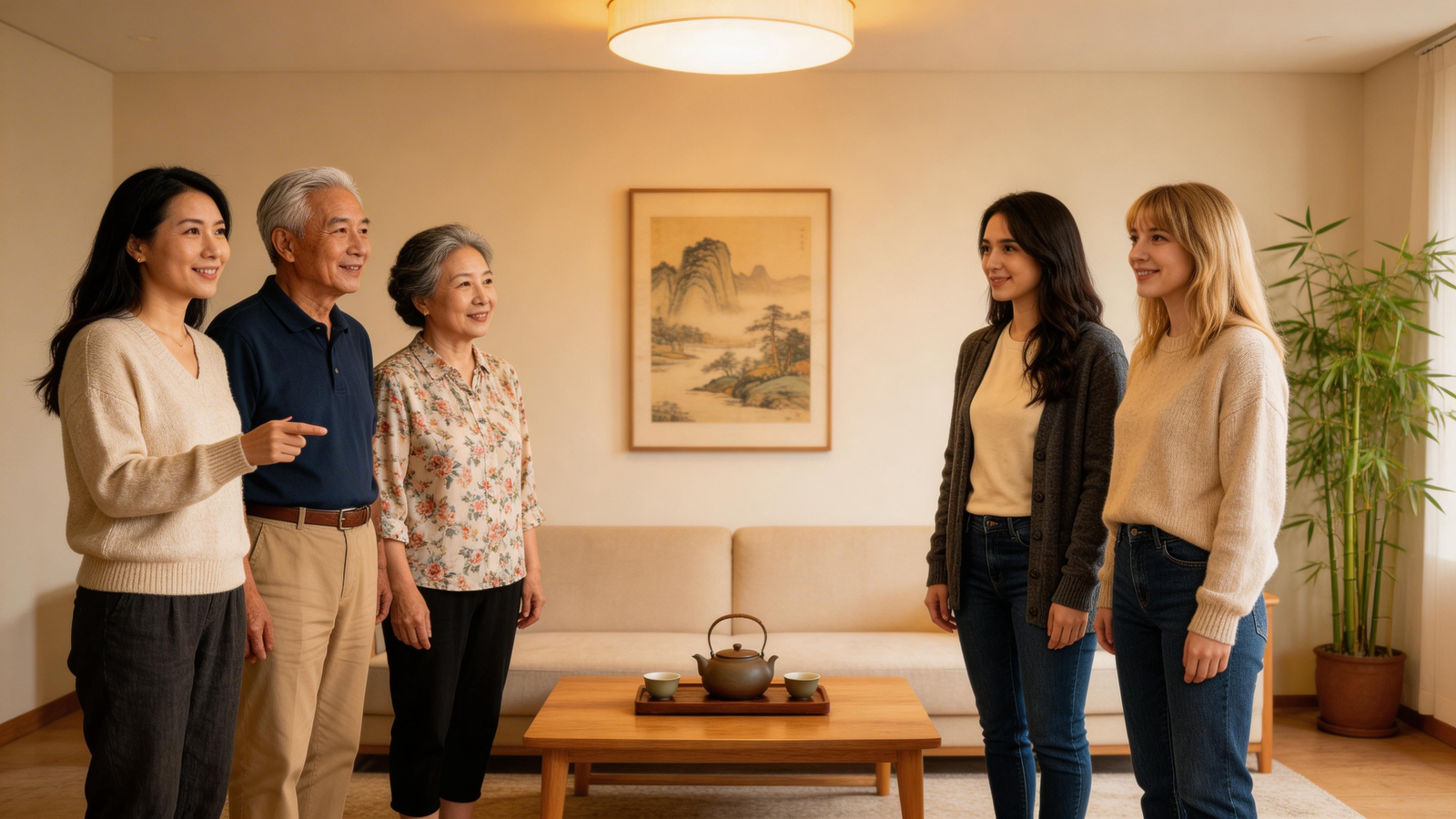
在王一雪家,白家月和安妮来做客。Bai Jiayue and Ān nī were visiting Wang Yì xuě at home.
听力问题: (1)王一雪给白家月和安妮介绍谁了? (2)王一雪觉得白家月和安妮怎么样?
王一雪
家月、安妮,快进来!我给你们介绍一下,这是孩子们的爷爷、奶奶。
白家月/安妮
你们好!
王一雪
爸,妈,这是白家月,这是安妮。她们都是一飞的学生。
刘爷爷
家月、安妮,你们好!
白家月
这是送你们的礼物。
刘爷爷
你们太客气了,还拿这么多礼物来!
白家月
一雪姐,这是给孩子们准备的礼物。
王一雪
谢谢!你们别客气,快坐吧!
Wang Yì xuě: Jiayue, Ān nī, come on in! Let me introduce everyone. These are the children's grandfather and grandmother.
Bai Jiayue and Ān nī: Hello!
Wang Yì xuě: Dad, Mom, this is Bai Jiayue, and this is Ān nī. They're both Yì fēi's students.
Grandpa Liu: Hello, Jiayue! Hello, Ān nī!
Bai Jiayue: These gifts are for you.
Grandpa Liu: You're too kind! You didn't have to bring so many gifts.
Bai Jiayue: Sister Yì xuě, here's the gift we prepared for the children.
Wang Yì xuě: Thank you very much! Please make yourselves at home and have a seat!
Bai Jiayue and Ān nī: Hello!
Wang Yì xuě: Dad, Mom, this is Bai Jiayue, and this is Ān nī. They're both Yì fēi's students.
Grandpa Liu: Hello, Jiayue! Hello, Ān nī!
Bai Jiayue: These gifts are for you.
Grandpa Liu: You're too kind! You didn't have to bring so many gifts.
Bai Jiayue: Sister Yì xuě, here's the gift we prepared for the children.
Wang Yì xuě: Thank you very much! Please make yourselves at home and have a seat!
课文3 Text 3
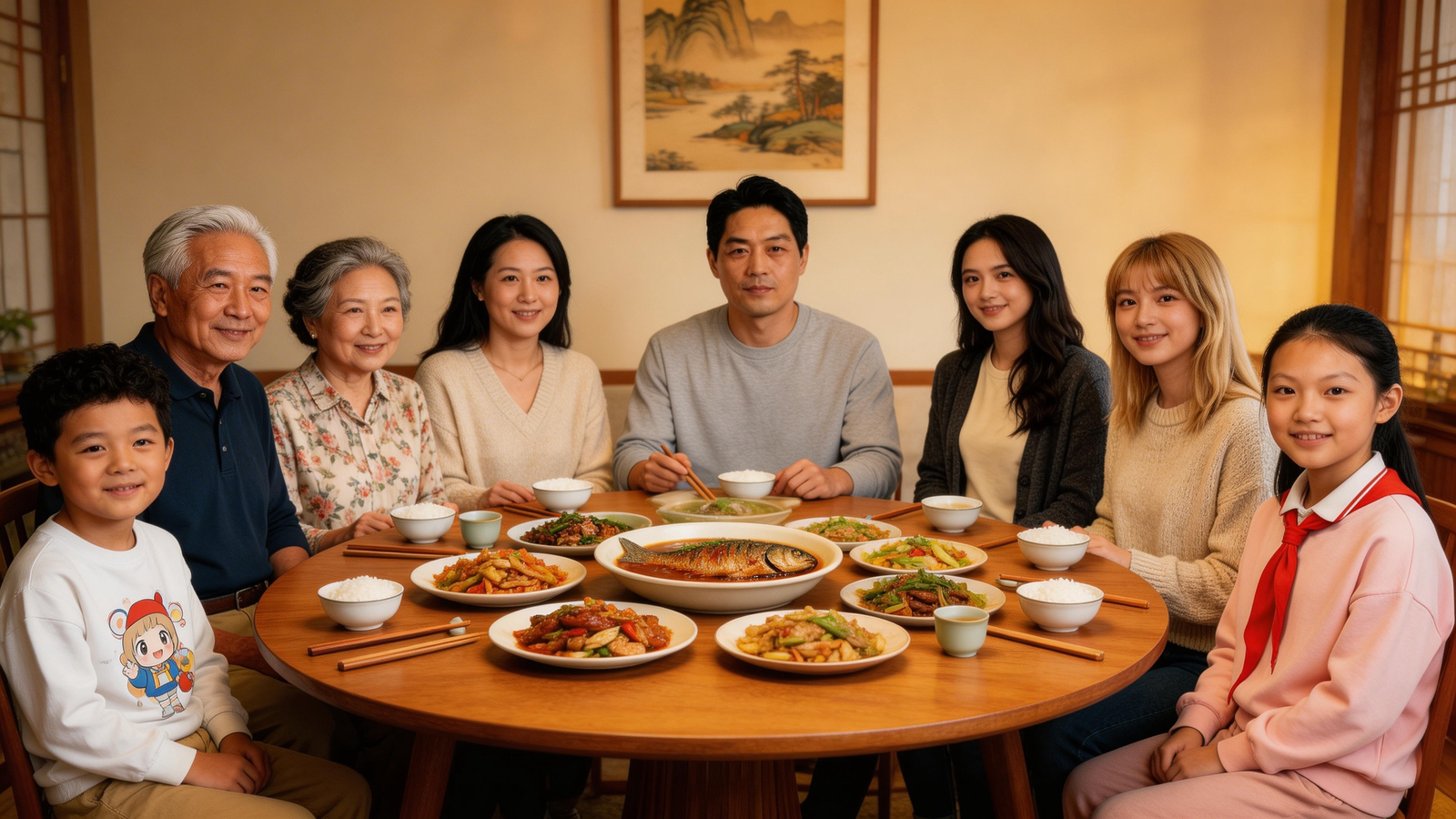
在王一雪家,白家月和安妮在吃饭。At Wang Yì xuě's home, Bai Jiayue and Ān nī were having a meal.
听力问题: (1)今天的菜是谁做的? (2)爷爷买什么了?
王一雪
都12点了,我们吃饭吧。
白家月
这么多好吃的,您太客气了!
王一雪
都是我自己做的,你们多吃点儿。
白家月
奶茶也很好喝,是您自己做的吗?
王一雪
不是,奶茶是爷爷买的。
白家月
在哪儿买的?我还没喝过这么好喝的奶茶。
王一雪
就在前边的商场,吃完饭你们可以跟我去看看。
Wang Yì xuě: It's already 12 o'clock. Let's eat.
Bai Jiayue: There are so many delicious dishes. You're really too kind!
Wang Yì xuě: I cooked all of these myself. Please help yourselves and eat as much as you like.
Bai Jiayue: The bubble tea tastes amazing. Did you make it yourself?
Wang Yì xuě: No, Grandpa bought it.
Bai Jiayue: Where did he buy it? I've never had bubble tea this good before.
Wang Yì xuě: He bought it from the mall up ahead. After we finish eating, you can come with me to check it out.
Bai Jiayue: There are so many delicious dishes. You're really too kind!
Wang Yì xuě: I cooked all of these myself. Please help yourselves and eat as much as you like.
Bai Jiayue: The bubble tea tastes amazing. Did you make it yourself?
Wang Yì xuě: No, Grandpa bought it.
Bai Jiayue: Where did he buy it? I've never had bubble tea this good before.
Wang Yì xuě: He bought it from the mall up ahead. After we finish eating, you can come with me to check it out.
课文4 Text 4
判断正误: (1)回国前,白家月请王一雪到饭店吃饭。 (2)因为白家月喜欢喝奶茶,所以爷爷准备了奶茶。
回国前一天,我们去一雪姐家了。到她家的时候,饭菜都做好了。刘爷爷还准备了奶茶。因为吃了太多东西,我们吃完饭是走回酒店的。
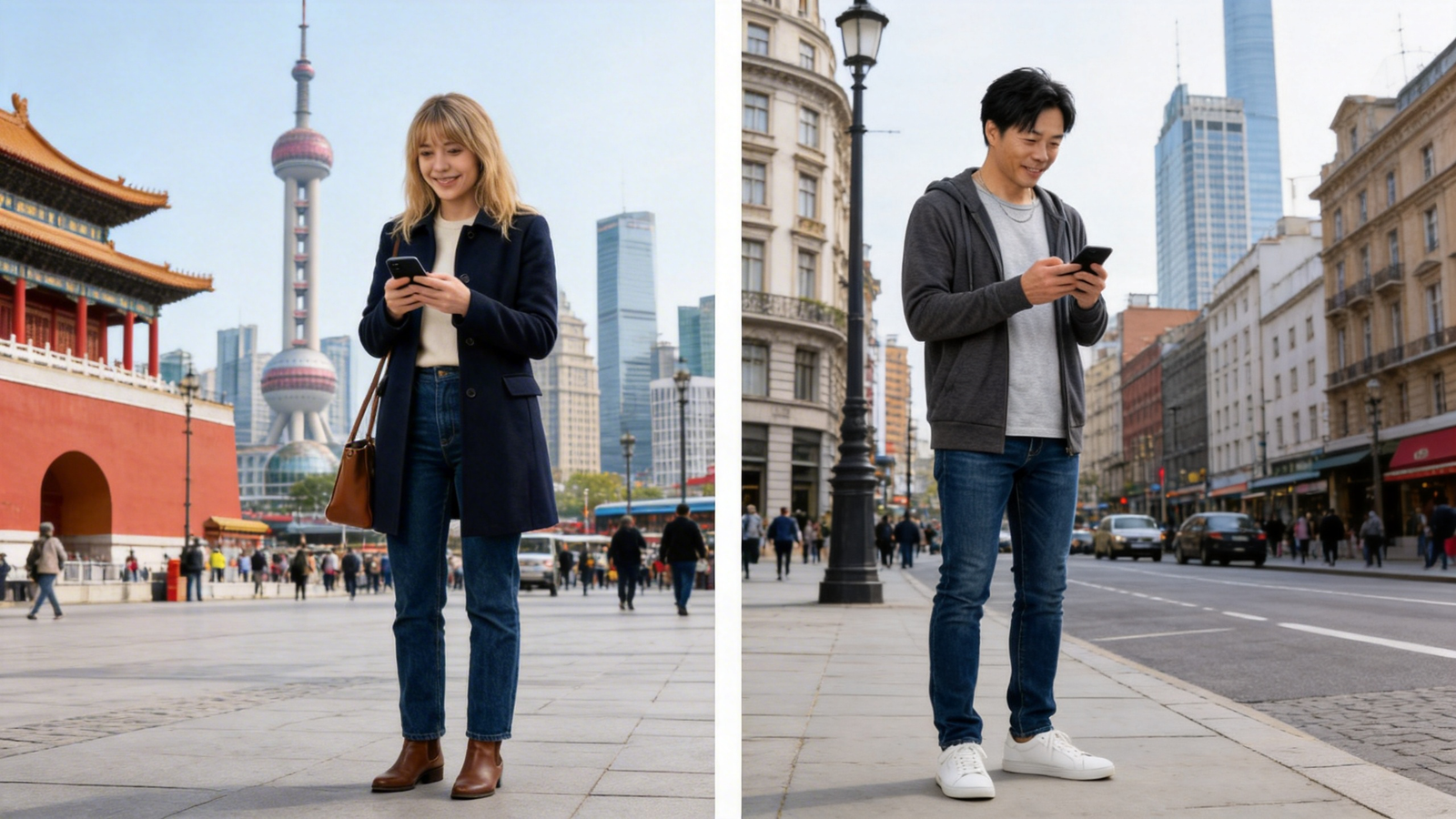
The day before we returned to our countries, we visited Sister Yì xuě's home. When we arrived, the food was already prepared. Grandpa Liu had also prepared bubble tea for us. Since we ate so much, we walked back to the hotel after the meal.
生词 New Words
语法点 Grammer
1 简单趋向补语(1) Simple Complement of Direction (1)
简单趋向补语的基本结构是“动词+来/去”。其中,“来”表示动作朝着说话人的方向进行,“去”表示动作背离说话人的方向进行,最常用的动词有“上、下、进、出(chū, get out)、回、过”。
The basic structure of simple complements of direction is "Verb+来/去”. Here,“来” indicates that the action is moving toward the speaker, while “去” indicates that the action is moving away from the speaker. In this structure, the most commonly used verbs include “上”, “下”,“进”,“出”,“回”, and “过”.- (1) 我不上去了,就在下面等你。(说话人在下边,听话人在上边)
I'm not going up. I'll wait for you downstairs. (The speaker is downstairs, and the listener is upstairs) - (2) 家月到下边了,你下去接她吧。(说话人在上边,听话人在上边)
Jiayue has arrived downstairs. Go down and meet her. (The speaker is upstairs, and the listener is upstairs) - (3) 我在外边呢,你出来(chūlái, come out)吧。(说话人在外边,听话人在里边)
I'm outside. Come out. (The speaker is outside, and the listener is inside)
另外,“叫、开、买、拿、请、送、要、找、走”等动词也可以用在这个结构中。
Additionally, verbs such as “叫”,“开”,“买”, “拿”,“请”,“送”,“要”,“找”, and “走” can also be used in this structure.- (1) 她拿来一本中文书。
She brought a Chinese book. - (2) 你别过来拿了,我给你送去。
Don't come over to pick it up, I'll bring it to you.
“起来(qǐlái, get up)”是一种比较特殊的用法,它表示起床或动作向上的趋向。
“起来” is a special expression in Chinese that can either mean "to get up (from bed)", or indicate an upward directional movement.- (1) 今天早上5点她就起来了。
She got up at 5 o'clock this morning. - (2) 你起来吧,让小妹妹坐这儿。
Get up and let the little sister sit here.
2 简单趋向补语(2) Simple Complement of Direction (2)
动词既带简单趋向补语,又带宾语时,如果宾语是地点名词,放在“来/去”前面;宾语是事物名词,放在“来/去”前后都可以。
When a verb takes both a simple complement of direction and an object: if the object is a location noun, place it before “来/去”; if the object is a thing noun, it can be placed either before or after “来/去”.- (1) 你们太客气了,还拿这么多礼物来!
You're too kind! You didn't have to bring so many gifts! - (2) 家月给我送来了一本书。
Jiayue sent me a book. - (3) 上课了,你们快进教室来吧。
Class has started. Come into the classroom quickly.
另外,动词“开、买、拿、请、送、要、找、走”等也可以加上“上、下、进、出、回、过”等简单趋向补语。这种情况下,动词一般带宾语,并且放在“上、下、进、出、回、过”后面。
In addition, verbs such as “开”,“买”,“拿”,“请”,“送”,“要”,“找”, and “走” can also combine with complements of direction like “上”,“下”,“进”,“出”,“回”, and “过”. In this case, the verb usually takes an object, which is placed after “上”,“下”,“进”,“出”,“回”, and “过”.- (1) 爸爸今天买回了很多水果。
Dad bought back a lot of fruit today. - (2) 妈妈拿出了二十块钱,让小雪自己去买点儿吃的。
Mom took out twenty yuan and let Xiaoxue go buy something to eat herself.
3 固定格式“都………………了” Fixed Pattern “都………………了”
固定格式“都………………了”表示已经、达到,一般含有强调或者不满的语气。
The fixed pattern“都………………了” conveys meanings such as "already" or "up to a certain point", and generally carries a tone of emphasis or dissatisfaction.- (1) 都12点了,我们吃饭吧。
It's already 12 o'clock. Let's eat. - (2) 都8点半了,你还不起床吗?
It's already 8:30. Haven't you got up yet? - (3) 我都去过北京了,不想再去了。
I've already been to Beijing. I don't want to go again.
中国文化及风土民情 Chinese Culture
提示Tips: 中国人打招呼的方式 (The Way Chinese People Greet Each Other)