
Lesson 16: 我听说有的熊猫出国了
目标 Objectives
- 能听懂并描述动物的特征、习性和生活环境。
Be able to understand and describe the characteristics, habits, and habitats of animals. - 能听懂并表达个人对动物的看法。
Be able to understand and express personal opinions about animals. - 掌握比较句(11)的用法,能表达事物在数量或时间上的差异。
Master the use of comparative sentences (11) to express differences in quantity or time. - 了解大熊猫的基本情况。
Gain a basic understanding of giant pandas.
热身 Warm-Up
1 在图片上标注下列词语。Label the picture with the following words.
2 两人一组,根据实际情况对话。Work in pairs and have a dialogue based on real-life situations.
(1)你喜欢去动物园吗?你在动物园最喜欢看什么动物?
Do you like going to the zoo? What's your favorite animal to see there?
(2)你养过什么小动物?给同学介绍一下你养过的动物。
Have you ever kept a pet? Describe the animal you had to your partner.
课文 1 Text 1
(1) 这只小猫养了多久了?
A 第一天养 B 养了一年多了 C 养了很多年了
(2) 现在这只小猫是什么样的?
A 特别小 B 特别可爱 C 不太干净

在一家宠物领养店,王一雪和孩子们在看动物。At a pet adoption center, Wang Yixue and the children were looking at the animals.
(1)服务员第一天看见这只小猫的时候,它是什么样的?
(2)服务员为什么觉得小猫很可爱?
(3)服务员和小猫的关系怎么样?
课文 2 Text 2
(1) 王一雪和孩子们在聊什么?
A 大熊猫 B 北京动物园 C 动物和人的不同
(2) 刘小雪为什么说弟弟是“十万个为什么”?
A 弟弟喜欢看书 B 弟弟喜欢听故事 C 弟弟喜欢问问题

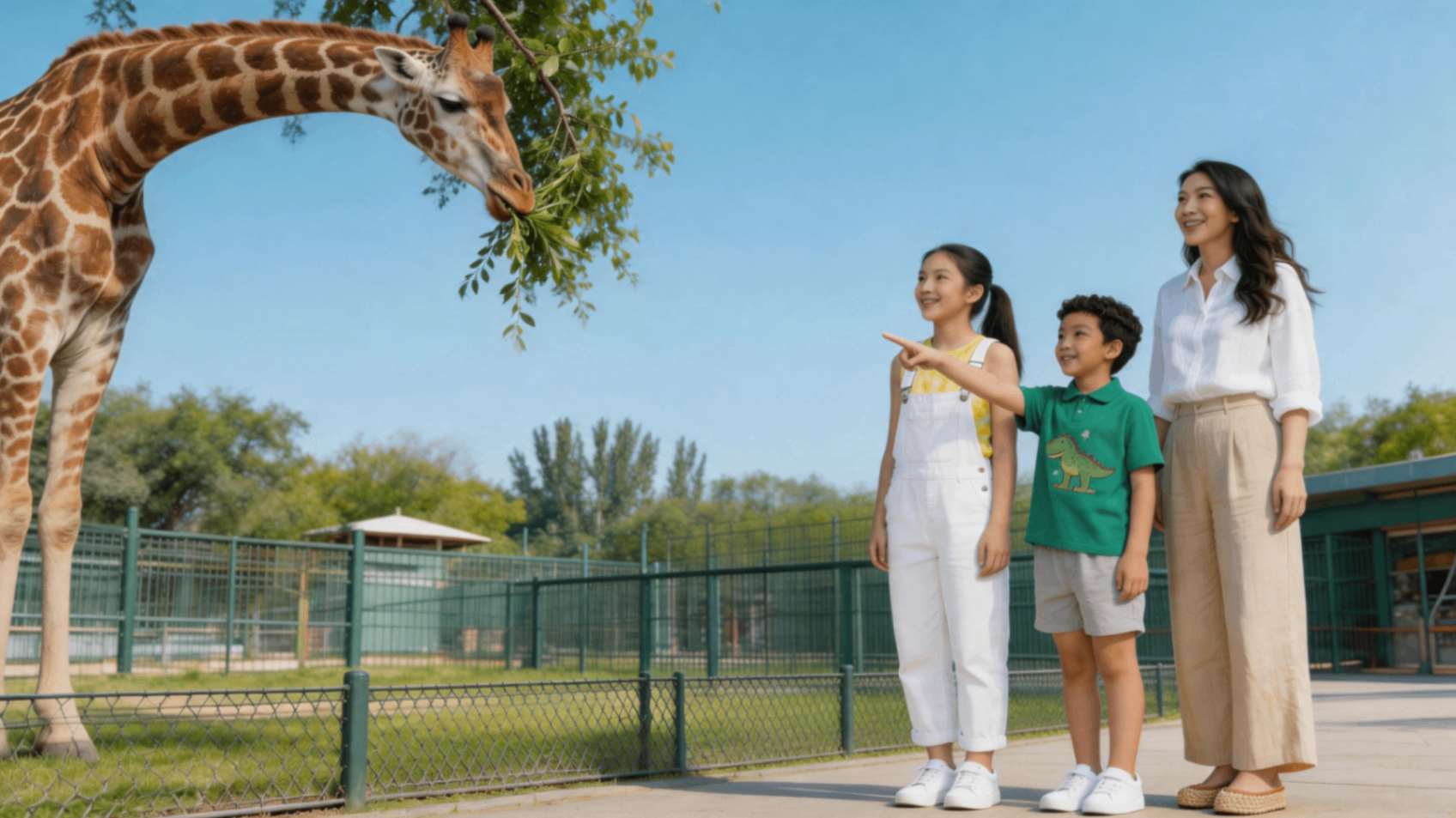
在动物园,王一雪和孩子们边走边聊。At the zoo, Wang Yixue and her children were chatting while walking.
“十万个为什么”源于中国很受欢迎的少儿科普读物《十万个为什么》,常用来形容孩子充满好奇心,有时以开玩笑的口吻形容对方问题多。
The term "One Hundred Thousand Whys" originates from a best-selling Chinese children's popular science book series of the same name. It is often used to describe curious children, and sometimes jokingly used to tease someone for asking too many questions.
(1)大熊猫跟猫有关系吗?
(2)大熊猫为什么只吃竹子不吃肉?
(3)大熊猫为什么是中国的国宝?
课文 3 Text 3
(1) 一般来说,大熊猫每天做什么?
A 爬来爬去 B 跟人拍照 C 吃东西和睡觉
(2) 刘小雪让妈妈帮她做什么?
A 照一张照片 B 买一些吃的 C 找一只熊猫
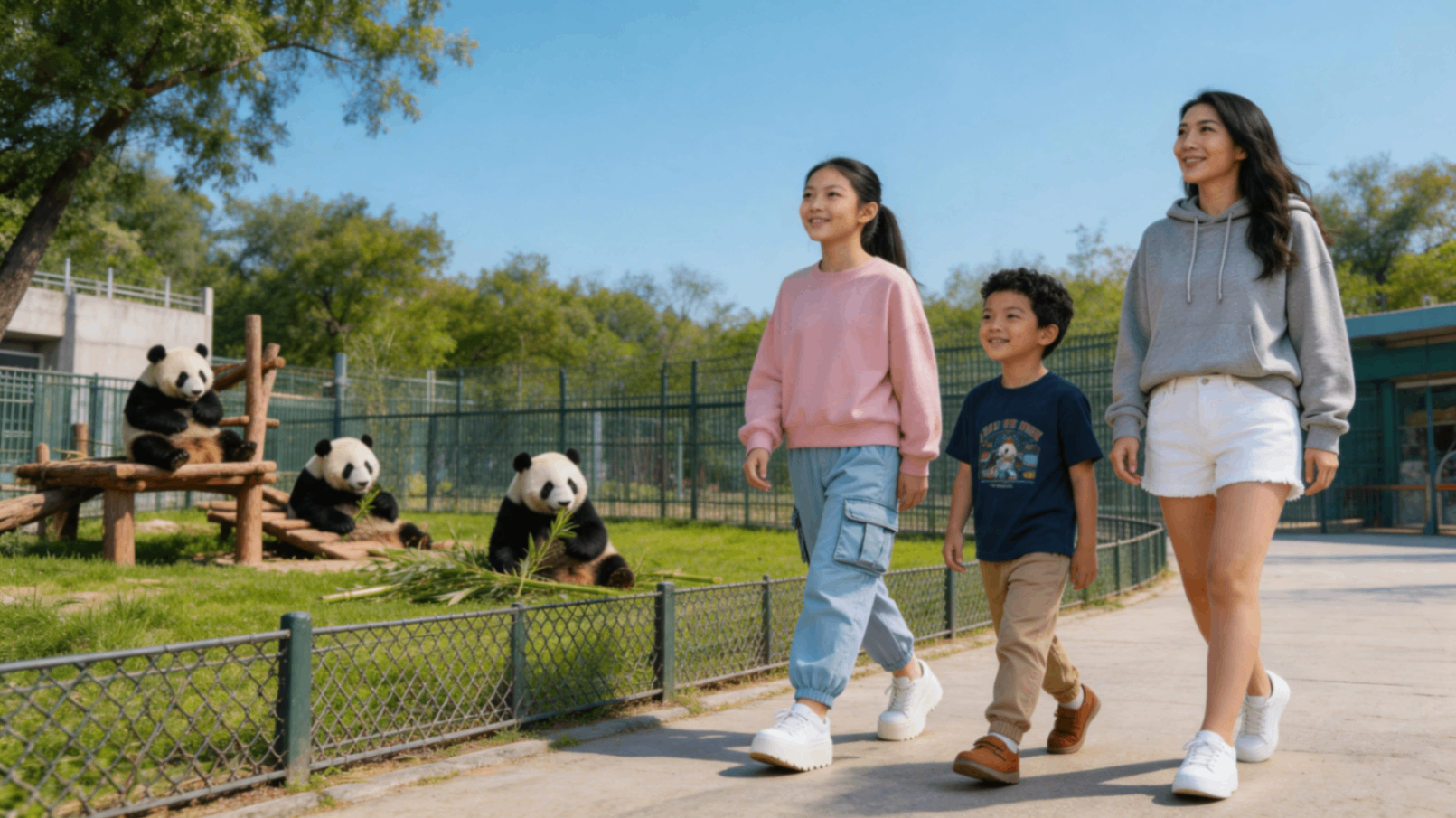
在熊猫馆,王一雪和孩子们在看大熊猫。At the Panda House, Wang Yixue and the children were watching the giant pandas.
(1)刘小雪为什么觉得这只大熊猫可爱极了?
(2)王一雪为什么觉得它没吃饱?
(3)刘小明觉得大熊猫的生活怎么样?
课文 4 Text 4
(1) 游客最喜欢去北京动物园看什么动物?
A 牛 B 羊 C 大熊猫
(2) 北京动物园早上几点开门?
A 六点 B 七点 C 七点半
在家里,王一雪在写日记。At home, Wang Yixue was writing in her diary.
(1)今天王一雪带孩子们去哪儿了?
(2)很多游客去动物园做什么?
(3)北京动物园夏天和冬天的关门时间有什么不同?
生词 New Words
语法点 Grammar
1 并列复句“一会儿………………,一会儿………………”
Coordinate Complex Sentence “一会儿………………, 一会儿……………”并列复句“一会儿………………,一会儿………………”表示短时间内发生的不同动作,或者一种对立的情况。例如:
The coordinate complex sentence “一会儿………………,一会儿………………” indicates different actions occurring within a short period, or alternating states. For example:- (1) 它一会儿在你脚边睡觉,一会儿在你身上爬。
- (2) 他一会儿进来,一会儿出去,忙得很。
- (3) 最近天气变化很快,一会儿冷,一会儿热。
2 介词“关于” Preposition “关于”
介词“关于”后面加名词,引出涉及的对象。例如:
The preposition “关于” is typically followed by a noun to introduce a topic or subject. For example:- (1) 关于这个问题,我得慢慢给你讲。
- (2) 关于他的要求,我们还要开会以后再决定。
- (3) 关于比赛的时间,我明天一定告诉大家。
3 固定短语“一般来说” Set Phrase “一般来说”
“一般来说”是一个固定短语,意思是大多数情况下是这样,常用于句子的开头。
“一般来说” is a set phrase that means "generally speaking" or "in most cases". It is often used at the beginning of a sentence. For example:- (1) 一般来说,熊猫每天要睡很多次觉。
- (2) 一般来说,这种树每年开一次花。
- (3) 一般来说,学习外语需要多练习。
4 比较句(11) Comparative Sentences (11)
用“比”表示的比较句中,谓语为一般动词时,前面可以用“多、少、早、晚”,表示两者在数量或时间上的差异。
In comparative sentences using “比”, when the predicate is a general verb, “多”, “少”, “早”, or “晚” can be placed before the verb to indicate a difference in quantity or time between two things.- (1) 冬天比夏天早关门一个小时。
- (2) 哥哥比弟弟多吃了三个饺子。
- (3) 我比他晚到了十分钟。