
Lesson 18: 我学会了包饺子
目标 Objectives
- 能听懂并描述生活中的变化和成长经历。
Be able to understand and describe life changes and personal growth. - 能听懂并使用概数表达不确定的数量。
Be able to understand and use approximate numbers to express approximate quantities. - 掌握“只要”的用法,能表达充分条件和结果。
Master the use of “只要” to express a sufficient condition and its result. - 了解中国传统节日“春节”的习俗。
Gain an understanding of the customs of the traditional Chinese festival, Spring Festival.
热身 Warm-Up
1 给下面的词语选择对应的图片。Match the phrases with the pictures.
2 两人一组,根据实际情况对话。Work in pairs and have a dialogue based on real-life situations.
(1)你在中国过过哪些节日?
Which festivals have you celebrated in China?
(2)你知道中国人怎么过春节吗?
Do you know how Chinese people celebrate the Spring Festival?
课文 1 Text 1
(1) 白家月为什么很开心?
A 可以去北京 B 可以去李文家 C 可以在中国过春节
(2) 中国人一般怎么过春节?
A 去朋友家过节 B 出去旅游过节 C 跟家人一起过节
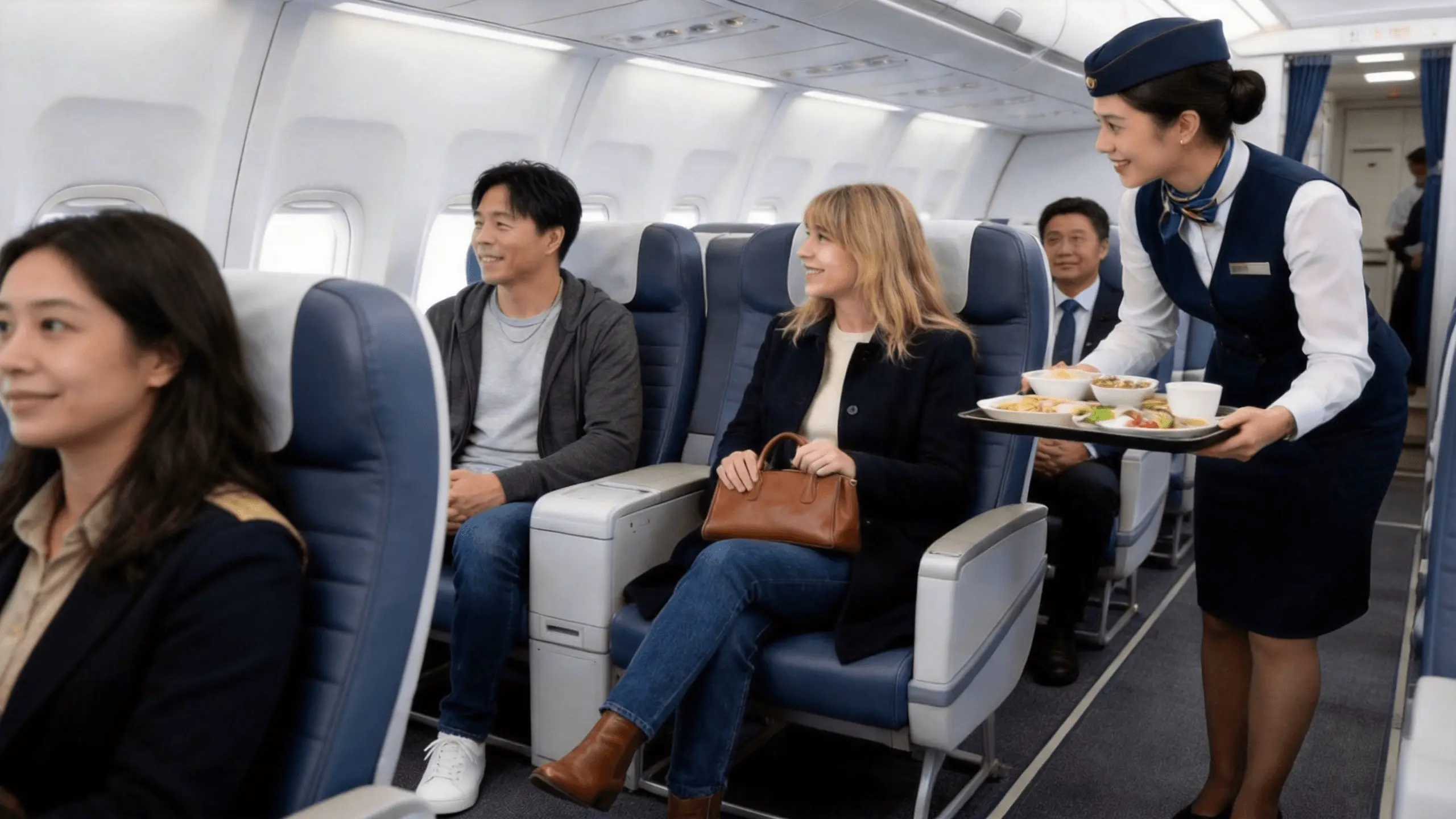
在飞机上,白家月和李文在聊天儿。
On the plane, Bai Jiayue and Li Wen were chatting.
(1) 李文为什么很高兴?
(2) 李文和家人春节的时候会做什么?
(3) 春节大概放几天假?
课文 2 Text 2
(1) 白家月为什么去李文家?
A 送礼物 B 学包饺子 C 一起过年
(2) 李文家今天晚上吃什么?
A 饺子 B 包子 C 面条儿
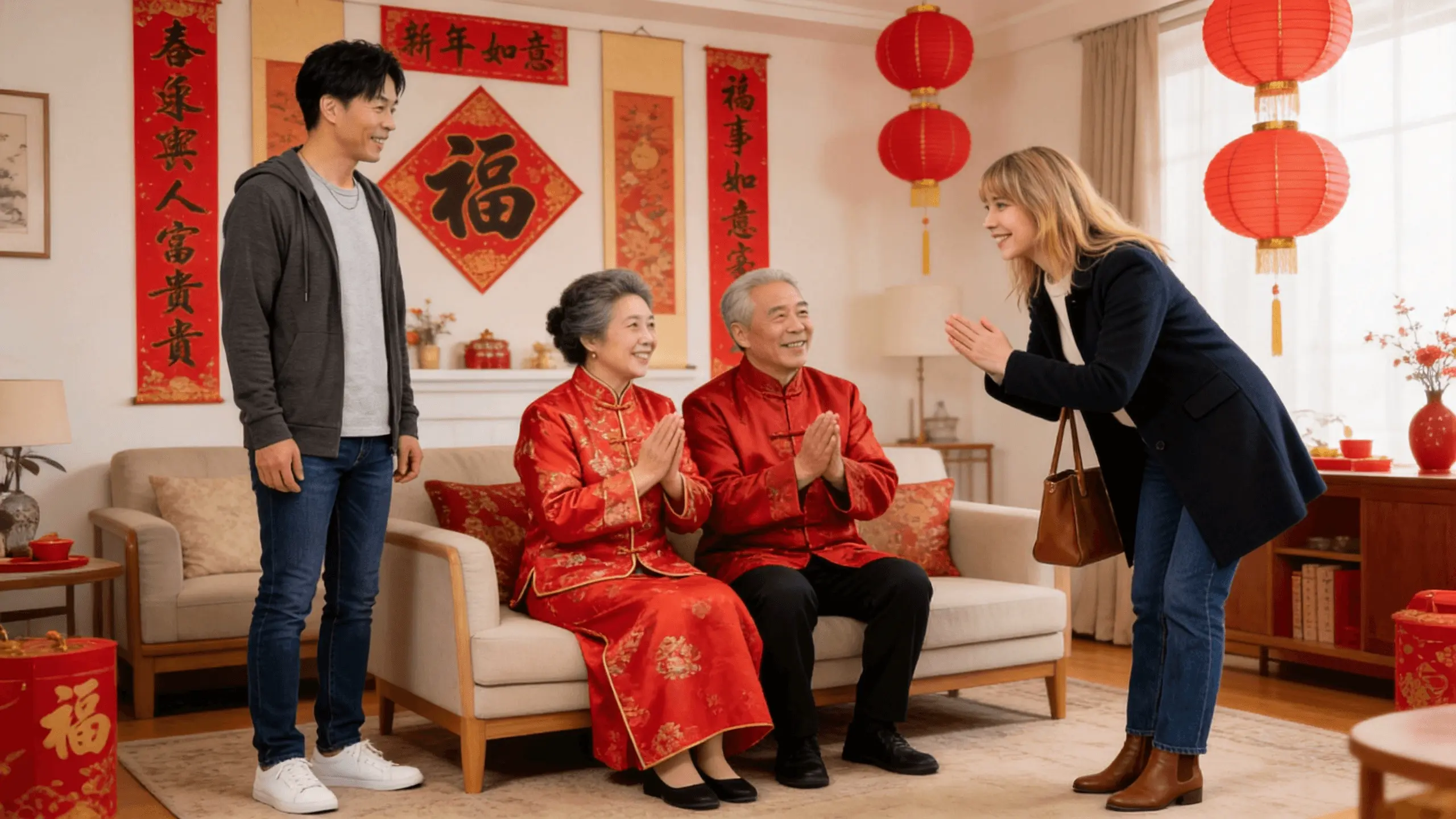
在李文家,白家月给李文的父母拜年。
At Li Wen's home, Bai Jiayue wished Li Wen's parents a Happy New Year.
(1) 白家月送礼物的时候说什么了?
(2) 李文的家人是怎么欢迎白家月的?
(3) 白家月想跟李文的家人一起做什么?
课文 3 Text 3
(1) 白家月和李文妈妈在做什么?
A 一起看电视 B 一起看视频 C 一起看照片
(2) 李文什么时候毕业?
A 一个月以后 B 一个学期以后 C 三四年以后
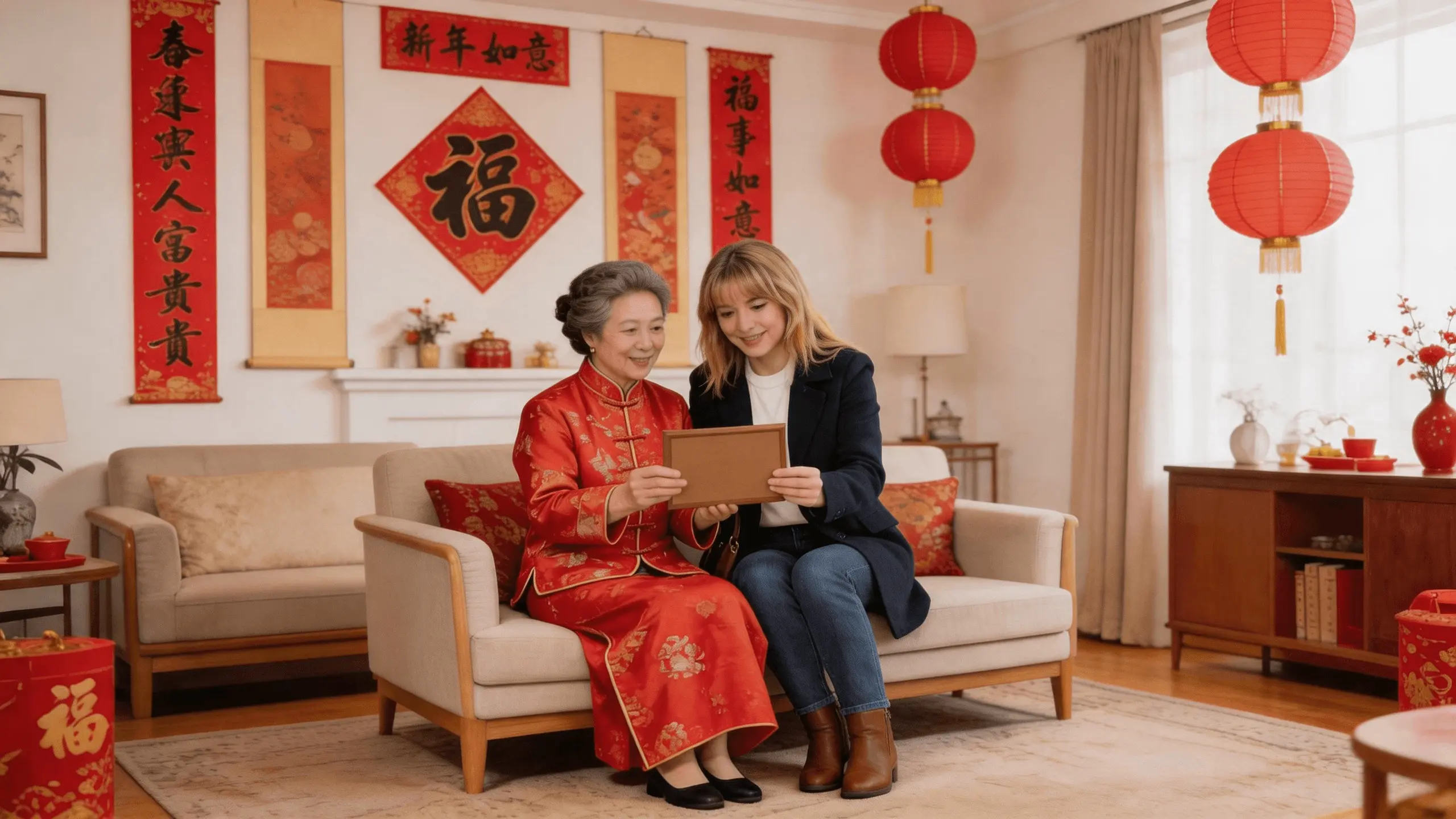
在李文家,李文妈妈和白家月在聊天儿。
At Li Wen's home, Li Wen's mother and Bai Jiayue were chatting.
(1) 李文第一次出国留学,是从哪儿出发的?
(2) 李文全家的照片是什么时候照的?
(3) 李文刚离开家的时候,张阿姨怎么样?
课文 4 Text 4
(1) 白家月这次来中国,让她最高兴的事是什么?
A 过春节 B 吃饺子 C 认识了李文的父母
(2) 在李文身上,白家月学到什么了?
A 如果想学医就要努力学习 B 只有成绩好才能出国 C 只要坚持努力就能完成目标

在家里,白家月在写日记。
At home, Bai Jiayue was writing in her diary.
(1) 李文的父母给白家月看什么了?
(2) 白家月从李文的父母那里了解到什么了?
(3) 李文为什么能得到出国留学的机会?
生词 New Words
语法点 Grammer
1 概数表达法 Approximate Numbers
汉语中相邻的两个数字连用,表示不确定的数量。例如:
In Chinese, two adjacent numbers used together indicate an approximate quantity. For example:- (1) 春节大概放七八天假。
- (2) 教室里来了五六个学生。
- (3) 这些照片是三四年前照的吧?
2 “刚才”和“刚刚” Comparison of “刚才” and “刚刚”
“刚才”是时间名词,表示很短的时间以前,一般来说就是几分钟以前。“刚才”可以放在句首,也可以放在主语后面,动词前面。
“刚才” is a time noun that refers to the immediate past, usually just a few minutes ago. It can be placed at the beginning of a sentence, or between the subject and the verb.“刚刚”是时间副词,表示对说话人来说事情发生的时间不长,可能是几分钟、几天甚至几个月。“刚刚”应该放在主语后面,动词前面。
“刚刚” is an adverb of time indicating that an event happened not long ago from the speaker's perspective. It could be minutes, days, or even months ago.- (1) 刚才的电话是我妈妈打来的。
- (2) 我刚刚看视频学会了包饺子。
- (3) 他刚刚来北京两个月。
3 条件复句“只要……,就……” Conditional Complex Sentence “只要……,就……”
“只要……就……”中,“只要”后面是所需要的充分条件,有这个条件就能产生“就”后面的结果。主语可以放在“只要”前,也可以放在“只要”后。如果句子有两个主语,第二个主语要放在“就”前面。
In the conditional complex sentence “只要……就...”, the clause after “只要” presents a sufficient condition that guarantees the result following “就”.- (1) 我只要几天不跟他视频,就很想他。
- (2) 只要你同意,我们就这么决定了。
- (3) 只要你坚持每天早睡,身体就一定会好起来。
4 固定格式“从……起” Fixed Pattern “从……起”
固定格式“从……起”有“从……开始”的意思,多表示时间。常用在句首,作状语。
The fixed pattern “从……起” means “从……开始” (starting from...) and is often used to indicate time. It is usually placed at the beginning of a sentence as an adverbial.- (1) 他从那时起就努力学习。
- (2) 从那天起,我们就变成了好朋友。
- (3) 从那次旅游起,我对中国文化更有兴趣了。