Lesson 6: 高铁上还可以点外卖
目标 Objectives
- 能听懂并介绍交通方式的特点和出行体验。
Be able to understand and introduce the characteristics of means of transportation and travel experiences. - 能听懂并使用“如果”表达假设的情况和结果。
Be able to understand and use “如果” to express hypothetical situations and their results. - 掌握“越来越”短语,能描述事物的变化趋势。
Master the use of the phrase “越来越” to describe changing trends. - 了解中国的现代交通方式——高铁。
Understand China's modern means of transportation-high-speed rail.
热身 Warm-Up
1 给下面的词语选择对应的图片。Match the words with the pictures.
2 两人一组,根据实际情况对话。Work in pairs and have a dialogue based on real-life situations.
(1) 你坐过哪些交通工具?
Which means of transportation have you taken?
(2) 你最喜欢哪种交通工具?为什么?
Which means of transportation do you like most, and why?
课文 1 Text 1
听两遍对话,选择正确答案。Listen to the dialogue twice and choose the correct answer.
(1) 李文和白家月打算怎么去上海?
A. 开车 B. 坐飞机 C. 坐高铁
(2) 李文觉得高铁怎么样?
A. 高铁票很贵 B. 又快又舒服 C. 买票不方便
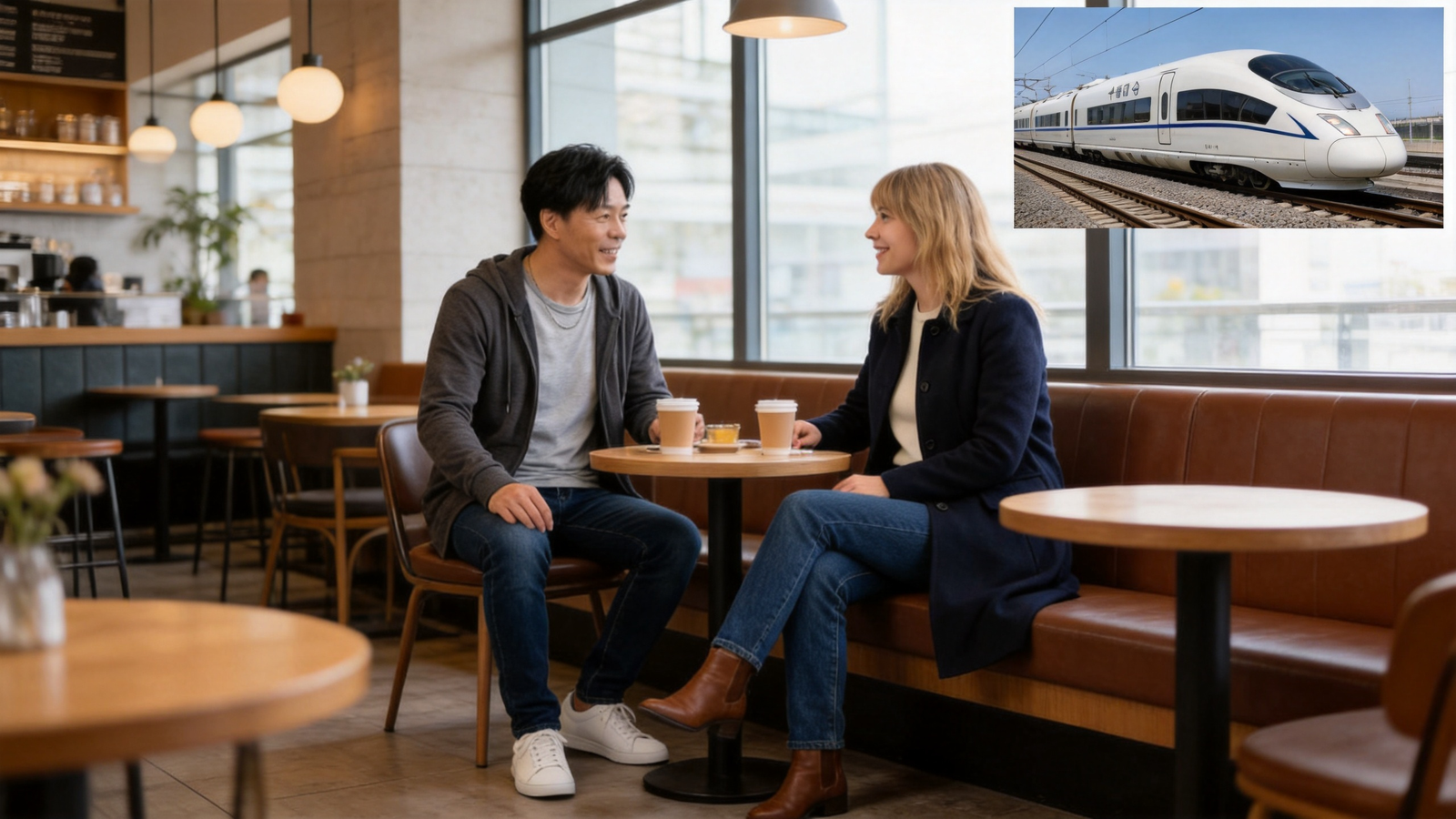
在咖啡厅里,李文和白家月在聊天儿。In the café, Li Wen and Bai Jiayue were chatting.
“上”在这里不是表示方向,而是表示实现了某个目标或愿望。
“上” in this context does not indicate direction, but signifies the realization of a certain goal or desire.
分角色朗读对话,读后回答问题。Role-play the dialogue and then answer the questions.
(1) 李文和白家月打算去哪个城市?
(2) 白家月为什么想坐高铁?
(3) 他们打算怎么买高铁票?
课文 2 Text 2
听两遍对话,选择正确答案。Listen to the dialogue twice and choose the correct answer.
(1) 李文和白家月现在在哪儿?
A. 在高铁站 B. 在出租车上 C. 在刘明的车上
(2) 如果没走错,他们什么时候到?
A. 马上就到 B. 二十分钟以前就到了 C. 一个小时以前就到了
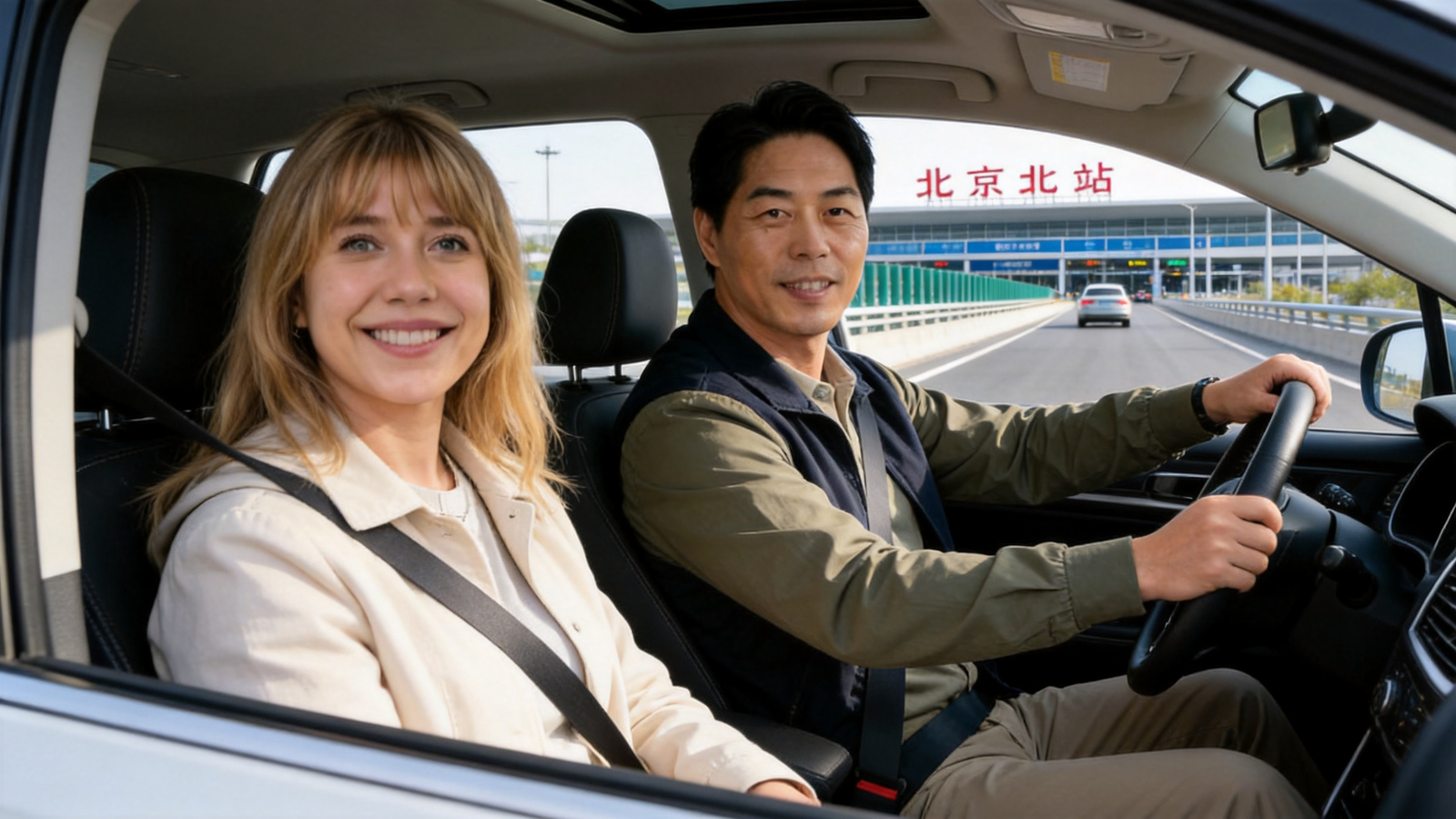
在车上,刘明开车送白家月和李文去高铁站。In the car, Liu Ming was driving Bai Jiayue and Li Wen to the high-speed train station.
分角色朗读对话,读后回答问题。Role-play the dialogue and then answer the questions.
(1) 刘明为什么说“应该不会迟到”?
(2) 白家月觉得这条路有什么问题?
(3) 刘明为什么今天走了这条路?
课文 3 Text 3
听两遍对话,选择正确答案。Listen to the dialogue twice and choose the correct answer.
(1) 常用的东西李文放在哪里?
A. 手里 B. 包里 C. 行理箱里
(2) 他们在哪里检票进站?
A. 车站门口 B. 一层门口 C. 二层检票口
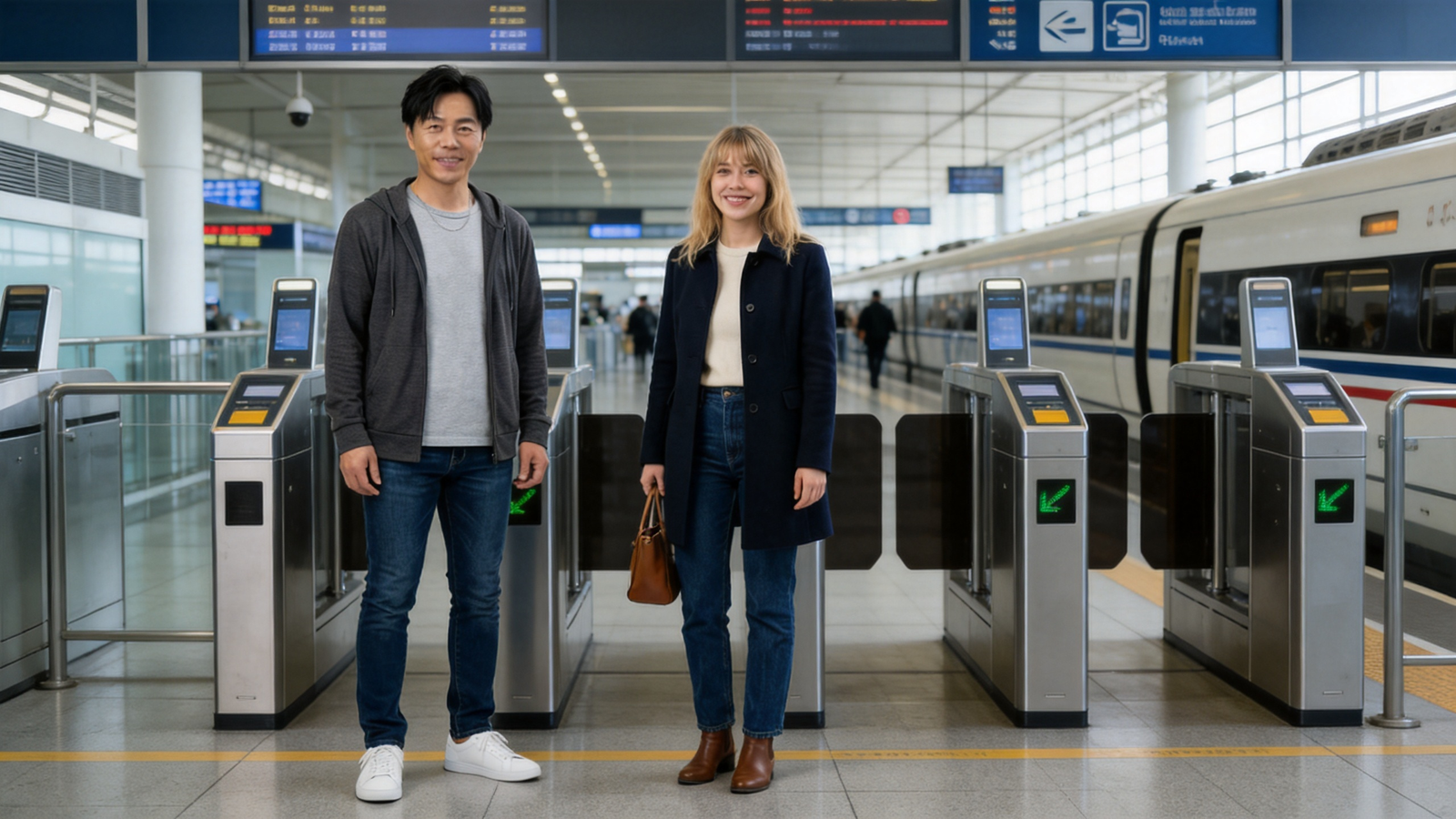
在高铁站,李文和白家月排队安检、检票。At the high-speed train station, Li Wen and Bai Jiayue were waiting in line for security check and ticket inspection.
分角色朗读对话,读后回答问题。Role-play the dialogue and then answer the questions.
(1) 白家月为什么要用充电宝?
(2) 他们怎么检票进站?
(3) 他们怎么去检票口?
课文 4 Text 4
听两遍课文,选择正确答案。Listen to the text twice and choose the correct answer.
(1) 白家月觉得坐高铁怎么样?
A. 高铁站很远 B. 高铁上很舒服 C. 高铁上人很多
(2) 喜欢坐高铁的人多不多?
A. 不太多 B. 有点儿多 C. 越来越多
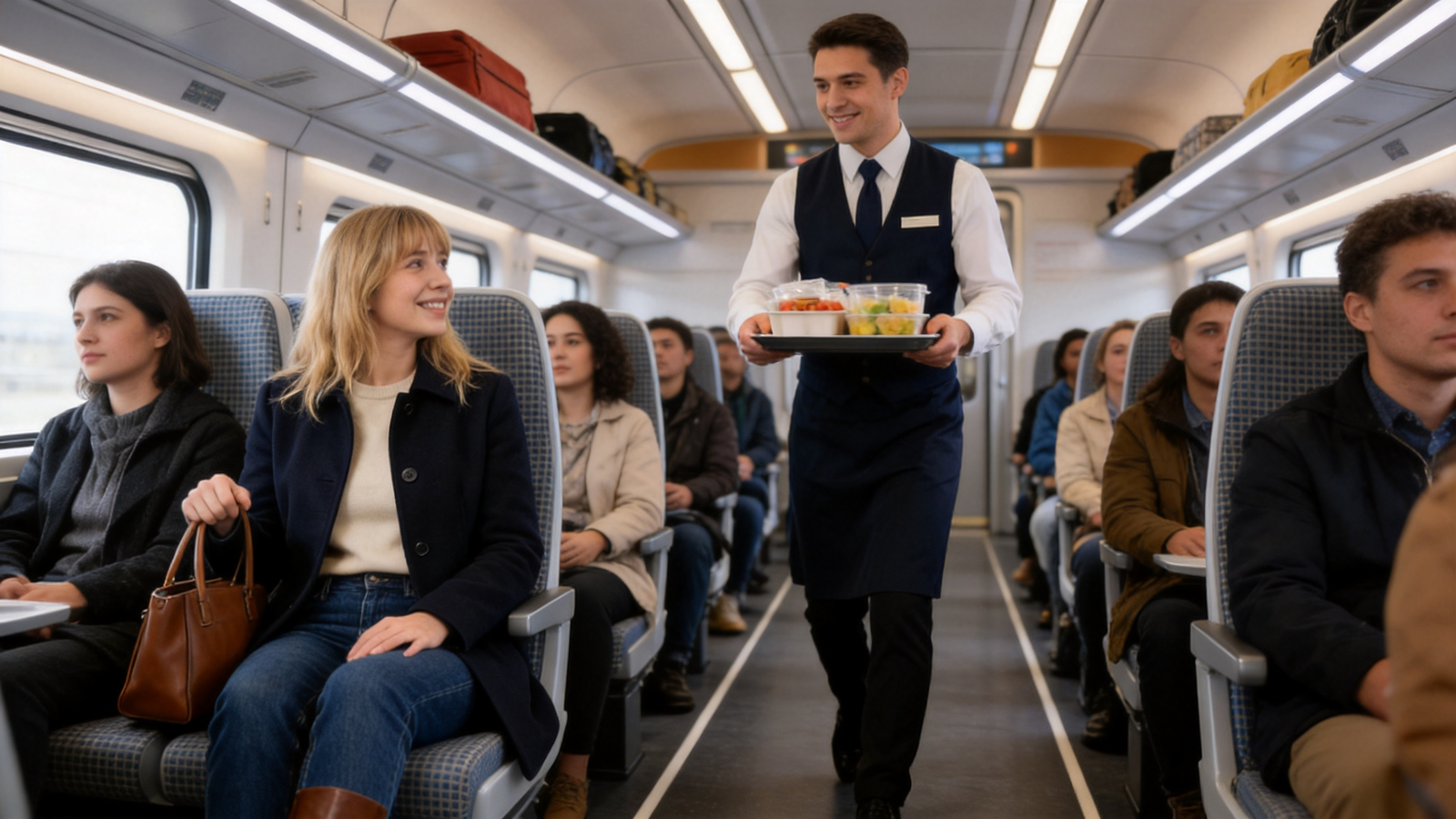
在家里,白家月给安妮打电话介绍自己的旅行。At home, Bai Jiayue was calling Annie to tell her about her trip.
朗读课文,读后回答问题。Read the text and then answer the questions.
(1) 白家月是怎么去上海的?
(2) 高铁上怎么点外卖?
(3) 白家月想带谁坐高铁?
生词 New Words
语法点 Grammar
1 固定格式“该………………了” Fixed Pattern “该………………了”
固定格式“该………………了”表示到了需要做某事的时候,多在口语中使用。例如:
The fixed pattern “该………………了” indicates that it is time to do something, and it is often used in colloquial speech. For example:- (1) 咱们该买去上海的票了。
- (2) 八点了,该上课了。
- (3) 已经很晚了,我该睡觉了。
2 假设复句“如果………………,就………………” Hypothetical Complex Sentence
假设复句“如果………………,就………………”中,“如果”后面的分句是一个假设,“就”后面的分句是在这种假设情况下产生的结果。注意,第二个分句的主语要放在“就”的前面。例如:
In the hypothetical complex sentence “如果………………,就………………”, the clause following “如果” is a hypothesis, while the clause following “就” is the result under that condition. Note that the subject of the second clause is placed before “就”. For example:- (1) 如果没走错,二十分钟以前就到了。
- (2) 如果你需要帮忙,就给我打电话。
- (3) 如果有时间,我就去上海玩几天。
3 固定短语“越来越” Set Phrase “越来越”
固定短语“越来越”的后面加上形容词或心理动词,表示随着时间的推移而在程度上发生变化。形容词或心理动词前都不能再加程度副词。例如:
The set phrase “越来越” is followed by an adjective or a psychological verb, indicating a change in degree over time. No adverb of degree can be added before the adjective or psychological verb. For example:- (1) 前面的人越来越多。
- (2) 我越来越喜欢这里的生活了。
- (3) 她越来越高,也越来越漂亮了。